America’s Diplomatic Credibility Is Not for Sale
Questionable appointments and potential conflicts of interest are undermining the integrity of American diplomacy.
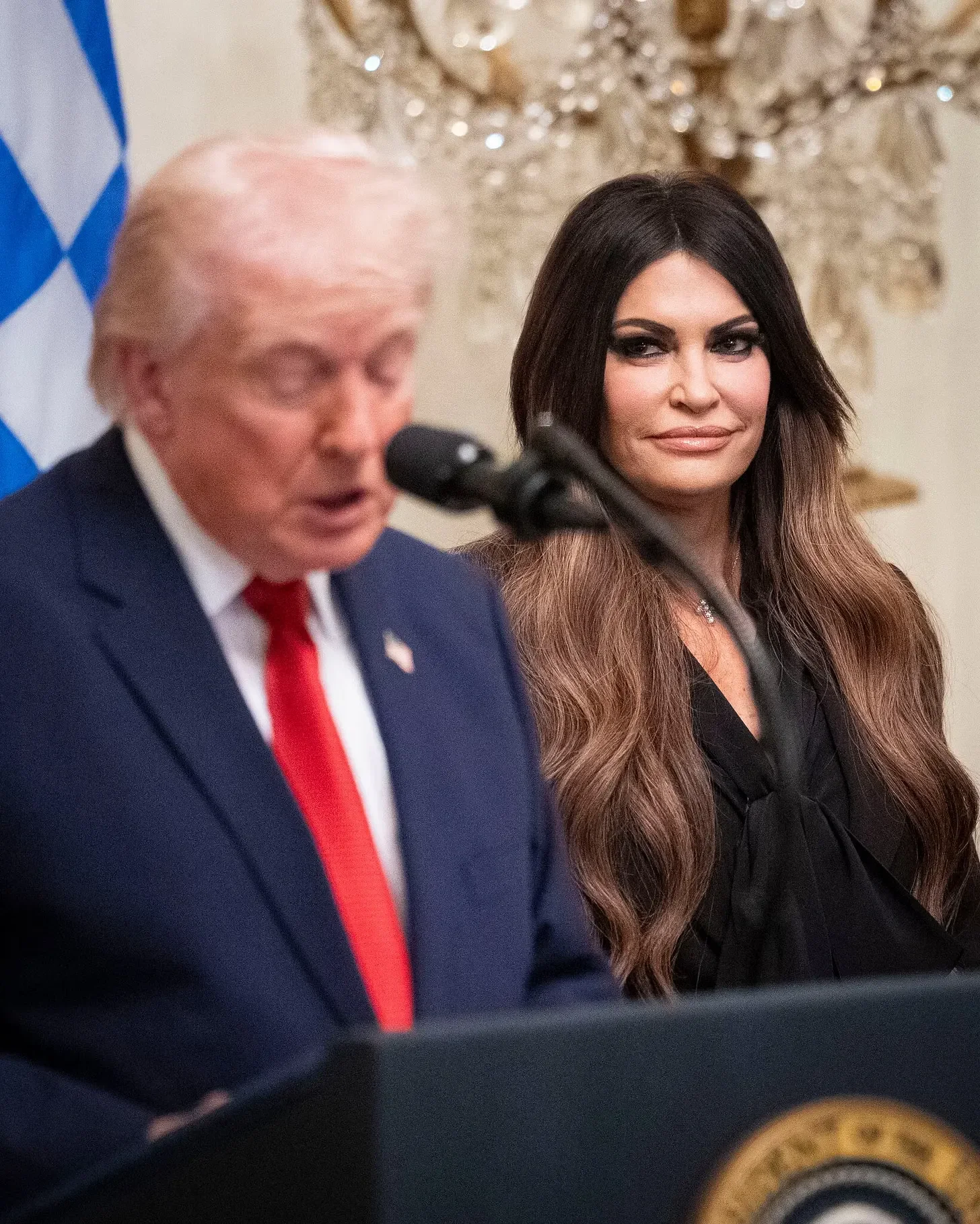
Kimberly Guilfoyle with President Trump at a White House event in March.
Photo: Doug Mills/The New York Times
The scandal is not simply that Kimberly Guilfoyle resigned. It is that she was appointed to represent the United States in the first place. When loyalty and connections replace expertise and integrity, American diplomacy and national security pay the price.
Kimberly Guilfoyle resigned Tuesday as U.S. ambassador to Greece, hours after the White House said it had asked her to go. Some will say the system worked. It did not. The scandal is that she was sent to Athens at all.
Her résumé was built in television and campaign politics, not statecraft: a former Fox News host and political fundraiser who had been engaged to the president’s eldest son. Democrats questioned her qualifications, and the Senate confirmed her last September in a near-party-line vote. Greece, a NATO ally in a volatile region, deserved a seasoned strategist.
Since late September, the Wall Street Journal has reported allegations that, days before her confirmation hearing, she asked a Trump donor to wire $100,000 to pay her American Express bill, and that she boasted of Greek tycoons footing the bill for luxury travel. It also reported that she promoted a Greek construction firm whose lobbyist attended diplomatic meetings. The State Department’s inspector general is investigating. She denies wrongdoing and vows to “vigorously defend” herself, and her lawyers say the donor owed her money for speaking engagements. Investigators will sort out the facts.
I have spent years fighting corruption in Latin America, Europe, and Asia, including as U.S. Ambassador to Paraguay, where the fight against corruption was a top U.S. priority. It taught me one lesson above all: corruption is the existential fight for democracies. It hollows out courts, buys elections, enriches autocrats, and convinces citizens that nothing works for them. Our credibility in that fight rests on the people we send abroad. An ambassador accused of trading access for cash, or of letting local tycoons pick up her tab, hands every corrupt official a talking point: Americans are no different.
This is not an isolated failure. Last week, amid mounting allegations, the Secretary of State called her “a strong ambassador.” The ambassador to France, Charles Kushner, was pardoned by the president after pleading guilty to tax evasion and retaliating against a federal witness. His son Jared, now a special envoy, has reportedly sought billions from Gulf sovereign wealth funds for his private firm while negotiating for America; he says his diplomacy has not benefited his business. Special envoy Steve Witkoff co-founded a Trump-family crypto firm that drew a $500 million stake and a $2 billion deposit from entities tied to the UAE’s national security adviser; weeks later, the administration moved to send the UAE advanced AI chips. The White House denies any conflict and says he has divested. And America just quit GRECO, Europe’s anti-corruption watchdog, joining Russia and Belarus as the only other countries to do so. Very little, it seems, is disqualifying in this administration.
America needs ambassadors and envoys who are qualified professionals, who command their region’s politics and security, and who uphold the highest standards in their professional lives. That is not a partisan test. It is a national security requirement Americans should demand.
This is not only about the next nomination. The administration should apply these standards to every nominee and envoy. The Senate should demand genuine expertise, scrutinize financial disclosures, and refuse to confirm anyone whose chief qualification is loyalty. Embassies should not be not considered prizes. They are the front line of national security.
Founded in 2016, The Steady State is a nonprofit 501(c)(4) organization of more than 450 former senior national security professionals. Our membership includes former officials from the CIA, FBI, Department of State, Department of Defense, and Department of Homeland Security. Drawing on deep expertise across national security disciplines, including intelligence, diplomacy, military affairs, and law, we advocate for constitutional democracy, the rule of law, and the preservation of America’s national security institutions.