
Putin Wins. Trump’s Allies Profit. American (and Ukrainian) People Pay
By Jody Myers and Patrick Granfield
The proposed Lukoil deal puts U.S. financial power at the service of Russian interests and politically connected investors.
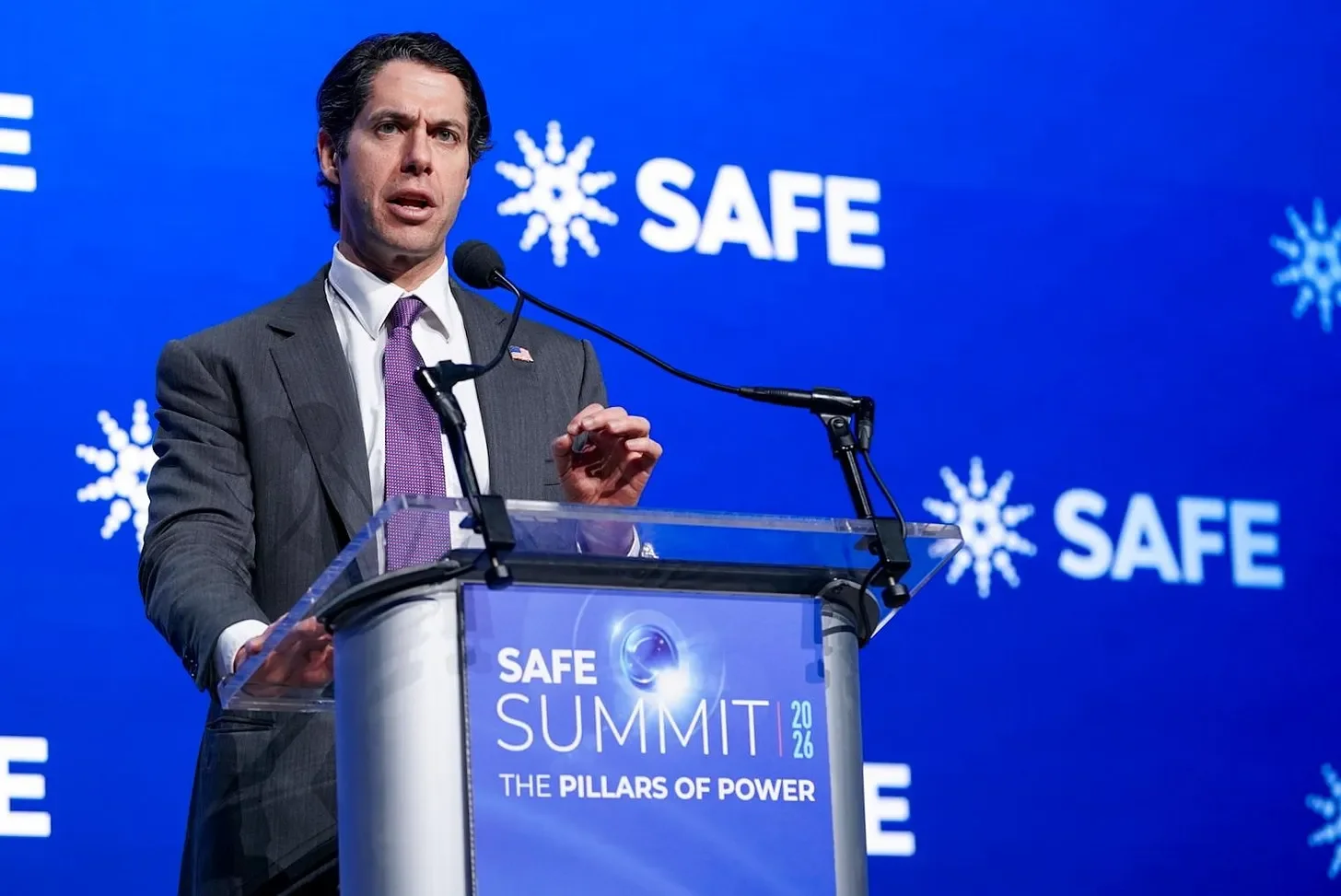
Current CEO of theU.S. International Development Finance Corporation (DFC), Ben Black
A proposed acquisition of Lukoil’s foreign assets risks turning U.S. sanctions relief and development financing into a windfall for Trump-connected investors, while allowing billions to flow back to a Russian oil giant. The deal threatens American institutions, undermines sanctions policy, and advances Putin’s ambitions.
President Donald Trump announced earlier this month that Vladimir Putin was supplying the United States with nearly five million tons of Russian diesel, a deal that drew condemnation from Kyiv and on Capitol Hill.
But another deal between the White House and Russia, now in its final stages, could be more damaging.
Lukoil, the Russian oil giant, is selling its foreign assets, worth roughly $20 billion. A U.S. government agency is now poised to join a group of politically connected investors in acquiring them.
The DFC Mission Creep
The U.S. International Development Finance Corporation (DFC) was launched in 2018 with bipartisan support to offer an alternative model to Chinese financing in the developing world. China’s Belt and Road initiative has financed $1.5 trillion in projects across more than 100 countries, often through opaque, debt-laden deals that nevertheless brought borrowing governments closer to Beijing.
The U.S. Congress charged DFC with a different mandate: not to direct state investment, but to mobilize private capital, driving development in low-income countries through projects that met high standards of Governance, transparency, environmental and social impact.
During Trump’s second term, DFC has strayed from its mission. Rather than offering an alternative to China’s model, DFC has begun to imitate it. In 2025, the agency signaled it would provide up to $700 million for a Kazakh tungsten mine in which Trump’s sons hold an indirect stake. DFC is now preparing to take a 15 percent stake in the deal for Lukoil’s assets.
The Promoters: Putin and Trump
Putin is one of the transaction’s most eager supporters. At a Kremlin meeting in September with Jared Kushner and Steve Witkoff, Putin promoted the Lukoil sale . He urged President Trump’s Ukraine negotiators to complete it as a sign that Russia could do business with the United States. Kushner and Witkoff agreed to push it forward.
DFC is supposed to invest where private capital won’t, but here, private capital was available: The U.S.-based Carlyle Group signed an agreement in January to buy Lukoil’s foreign assets, proposing to hold payment in a locked U.S. account to keep profits from Lukoil’s Russian owners. People close to the talks say Moscow considered the arrangement a nonstarter; the White House stalled and Carlyle’s offer lapsed this summer.
The Deal
Now a deal is taking its place, shaped to win Putin’s approval, with DFC playing a critical role. More than half the equity would go to Trump-connected partners acceptable to the Kremlin.
One is an investment firm overseen by Sheikh Tahnoon bin Zayed, the UAE’s national security adviser, whose affiliates have invested in the Trump family’s crypto venture and Kushner’s private equity firm. Others are the Al-Khayyat brothers, Qatar-based billionaires building a resort in Albania with Kushner and Ivanka Trump. Todd Boehly, U.S. billionaire who has given $2 million to pro-Trump causes, is leading the Group.
DFC is not investing any cash up front. Its contribution comes instead from the U.S. government’s power to lift sanctions. Lukoil’s foreign assets are on the market at a discount because of them. But once Treasury provides a license to remove the sanctions, the value of Lukoil’s assets would rise immediately. DFC’s equity would be payment for the government’s own regulatory decision.
The government would become the buyer, broker, and regulator of the same transaction.
The benefits for Russia are less direct, perhaps by design. Moscow rejected a bid that guaranteed nothing reached Russia, and Putin is now pushing a more complex transaction. In the proposed deal, the Boehly group would also buy Lukoil shares at a face value of roughly $10 billion from non-Russian holders. If Lukoil receives those shares in return, billions will still flow to Russia. The windfall would not arrive by wire transfer to Moscow, but to a company where Putin is widely seen as having final authority.
The Treasury has set a deadline this week for negotiations. Senators Roger Wicker and Jeanne Shaheen, one a Republican and the other a Democrat, have urged the administration to ensure that no financial benefit reaches Russia. DFC also has other strong supporters in Congress, and from both parties.
There is little time to stop the deal before the agency becomes a pillar of America’s own predatory, oligarchic financing model.
The Consequences
The Russian diesel shipments Trump announced this month will be gone by spring, but the effects of the proposed Lukoil deal could be more enduring. It would put two instruments of American power, DFC investment and the U.S. Treasury’s ability to lift sanctions, at the service of Trump-connected partners and Vladimir Putin’s ambitions. Russia would receive billions at the expense of American institutions; the Ukrainian people pay the greatest price.
Author Jody Myers, a member of The Steady State, served as chief risk officer and Guest Author Patrick Granfield served as senior advisor at the United States International Development Finance Corporation (DFC) between 2023 and 2025.
Founded in 2016, The Steady State is a nonprofit 501(c)(4) organization of more than 450 former senior national security professionals. Our membership includes former officials from the CIA, FBI, Department of State, Department of Defense, and Department of Homeland Security. Drawing on deep expertise across national security disciplines, including intelligence, diplomacy, military affairs, and law, we advocate for constitutional democracy, the rule of law, and the preservation of America’s national security institutions.