When Fear Pulls the Trigger, Corruption Follows
Why the normalization of intimidation and the dismantling of accountability under Trump threatens both the rule of law at home and America’s credibility abroad.
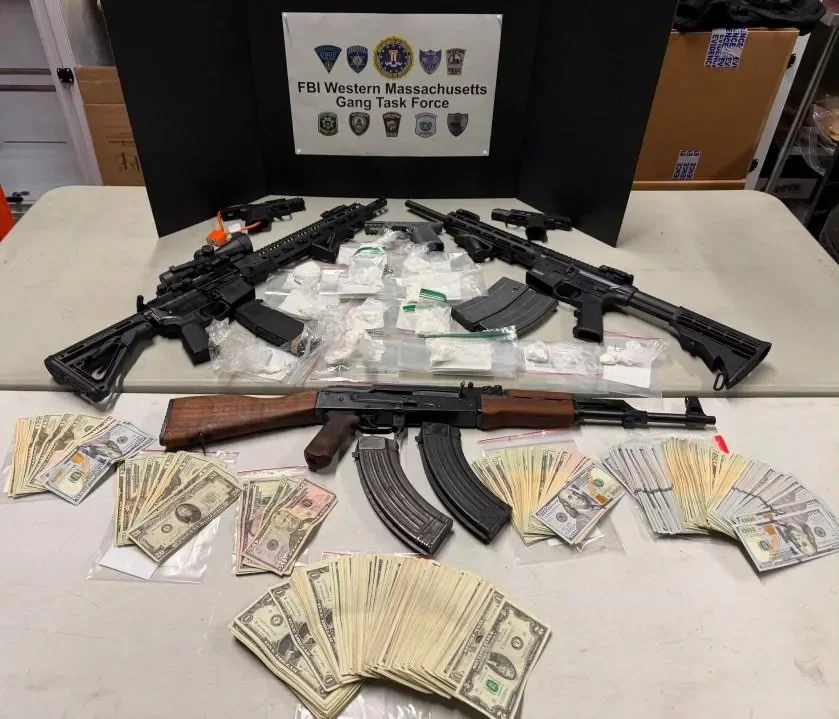
Americans often view gun violence and corruption as separate problems. One destroys lives; the other distorts public policy, weakens institutions, and enriches the well-connected. Around the world, however, the two often travel together – and both thrive when people are afraid to speak and monitoring declines, those in power face diminishing accountability.
Last week alone brought two reminders of America’s normalization of violence. In Illinois, authorities allege that a white-supremacist gunman attempted a mass shooting at a Hindu temple attended by Congressman Raja Krishnamoorthi and his family, only failing when the gunman’s weapon malfunctioned. In Oregon, a shooting at Silver Rail Elementary School left three children and a teacher dead. Both incidents unfolded amid growing concerns about political extremism and election-related violence ahead of the 2026 midterms.
Why should anti-corruption advocates care?
Because corruption rarely begins with a briefcase full of cash. More often, it begins when people become afraid to speak, investigate, challenge, or enforce the law, especially when political leaders signal that their powerful allies will be protected and critics punished.
Around the world, democratic erosion often follows a familiar pattern: intimidation of critics, weakened oversight, selective law enforcement, and concentration of power. In Russia and Belarus, restrictions on opposition, independent media, and civil society have reduced checks on state power. In El Salvador, observers warn that concentrated power and weakened oversight threaten democratic safeguards. In Paraguay, where I served as U.S. Ambassador, entrenched patronage networks and concentrated economic influence have long undermined reform efforts; the U.S. designation of former president Horacio Cartes for significant corruption underscored how weakened accountability entrenches power.
The common thread is not ideology but “state capture”: the weakening of institutions capable of investigating the powerful. Corruption becomes harder to expose when journalists are intimidated, watchdogs weakened, opposition figures marginalized, or citizens fear challenging those in power. These are also hallmarks of authoritarianism, not necessarily a sudden abolition of democracy, but its gradual hollowing out from within.
The relationship also runs in reverse. Around the world, corrupt officials have helped divert firearms to criminal and extremist networks through bribery and weak oversight. A 2025 Transparency International study examining more than 400 cases across 70 countries found corruption to be a significant enabler of illicit weapons diversion, including in transnational trafficking schemes in Latin America.
These international examples illustrate a broader lesson: when oversight weakens and accountability erodes, both violence and corruption become more difficult to contain. The United States is not immune. Under Trump, the systematic weakening of independent oversight, alongside escalating pressure on democratic institutions, raises serious concerns about replicating the very patterns of democratic backsliding it has long warned other nations against.
Since taking office in 2025, the Trump administration has removed at least 17 inspectors general from major federal agencies. These watchdogs investigate fraud, waste, abuse, and conflicts of interest throughout the government. Experts have also documented vacancies, staffing reductions, and proposed cuts to oversight functions, actions critics argue weaken key accountability mechanisms.
To be clear, firing inspectors general is not itself corruption. Presidents possess broad authority over executive personnel. The concern is what happens when political loyalty increasingly takes precedence over institutional independence, and the people responsible for exposing wrongdoing are removed or marginalized. Fewer watchdogs, audits, and investigations mean fewer opportunities to detect misconduct before it becomes systemic. An executive who weakens oversight while concentrating power is not merely changing government personnel. He is weakening the safeguards that distinguish constitutional government from authoritarian rule.
International experience offers a clear lesson: corruption thrives where fear replaces participation and oversight weakens. It thrives when threats drive public servants from office and intimidation becomes an accepted feature of public life, and when leaders increasingly treat accountability as an obstacle rather than an obligation.
The anti-corruption community has long argued that transparency, independent oversight, and the rule of law are essential safeguards against abuse of power. The events of 2025 and 2026 suggest another safeguard deserves equal attention: freedom from political violence and intimidation.
Protecting people from violence is not only a public-safety imperative. It is an anti-corruption imperative. When fear enters public life, independent institutions are undermined, and those in power place themselves beyond scrutiny, corruption is rarely far behind.
Founded in 2016, The Steady State is a nonprofit 501(c)(4) organization of more than 450 former senior national security professionals. Our membership includes former officials from the CIA, FBI, Department of State, Department of Defense, and Department of Homeland Security. Drawing on deep expertise across national security disciplines, including intelligence, diplomacy, military affairs, and law, we advocate for constitutional democracy, the rule of law, and the preservation of America’s national security institutions.