
Russian election interference, weakened American defenses, and a growing campaign to undermine electoral trust at home.

Russia is exploiting America's political divisions to weaken confidence in our elections, while cuts to the agencies responsible for countering foreign interference leave us more vulnerable. Protecting democracy requires both effective national defenses and citizens who refuse to spread disinformation.
Last week, numerous outlets reported on briefings provided to House and Senate leaders for the Intelligence Committees on Russian efforts to target electoral candidates who have expressed support for Ukraine. The briefing was provided by the Office of the Director of National Intelligence (ODNI).
This matters enormously for all voters in our country; Russia’s goal is to influence this election and undermine our democracy.
This election cycle features a number of closely contested races which will decide whether Republicans or Democrats control the House and Senate. Why does this matter? Why should we care about this reporting from the ODNI? I spent nearly three decades in the FBI both conducting intelligence operations against foreign adversaries and defending our country against theirs, with particular focus on Russia and China. I know how vulnerabilities are exploited, I know how difficult these operations can be to detect, and I know what it takes to counter them.
I know it when I see it.
Based on available information, in addition to targeting candidates who are sympathetic to Ukraine, the Russians appear to be targeting close races. They want us to distrust the outcome. There are three solid examples: Alaska, Maine, and Texas. According to the Cook Political Report, all three are now classified as “Toss Ups” in the election. Of note, five of the six Senatorial candidates in these states, Republicans and Democrats, are strong supporters of Ukraine.
In September 2026, the research firm Graphika, which regularly presents its findings to our Congress and the European Parliament, identified Russian disinformation operations targeting Democratic Senate candidates Mary Peltola (AK), Troy Jackson (ME), Jon Ossoff (GA), Sherrod Brown (OH), Roy Cooper (NC), Abdul El Sayed (MI), and Josh Turek (IA), and just this week, on October 21, NewsGuard documented a separate operation targeting Texas Democratic Senate candidate James Talarico with AI-generated videos promoting fabricated sexual-assault allegations. It’s important to acknowledge that while the intelligence reporting makes clear that Russia is targeting all supporters of Ukraine, as of this writing, there are no documented Russian attacks against Republicans.
Disturbingly, the very components of our federal intelligence and law enforcement communities and agencies responsible for battling this have been gutted. FBI Director Patel has fired, forced out, or reassigned dozens of senior FBI officials, including those whose expertise is needed to identify and counter Russia’s intelligence activities against us. Staffing in counterintelligence was reported, within the past month, to be at only 50 to 60% of funded staffing levels in many field offices. The FBI’s Foreign Influence Task Force was dismantled in 2025. The State Department’s Global Engagement Center, a complementary entity which tracked, analyzed, and publicly exposed covert influence operations and digital manipulation campaigns, was completely shut down in 2025. At the Department of Homeland Security, the Cybersecurity and Infrastructure Security Agency (CISA) was substantially downscaled, as its workforce was reduced by one-third, its budget was cut, and the election security program was abolished.
The Administration has eliminated the Foreign Malign Influence Center and dismantled the Cyber Threat Intelligence Integration Center. While the specifics remain largely classified at the CIA, according to the Brennan Center for Justice, the agency has been shifted away from analyzing foreign disinformation and digital influence.
Yet the fundamental assessment of the Intelligence Community remains: Russia is continuing, and accelerating, its covert actions.
So why should we care about this? Many of you reading may think that cutting government is good, but these cuts, dismantling, and firings are focused on the very people we need who understand and can counter Russia. Imagine having your house catch fire, but your local fire department has been reduced by nearly 50%, and those remaining just graduated from the Fire Academy. How confident would you feel?
The Administration is adding to this toxic mix, commenting daily about alleged fraud and irregularities and challenging the integrity of voting, most recently this past week with a pre-emptive filing to challenge the election results in the State of Alaska, if the Democratic candidate wins.
Increasingly aggressive Russian covert influence operations, the dismantling of American defenses against them, and presidential statements and decisions that risk advancing the very interests those defenses were designed to counter, we have an American president coordinating his domestic political messaging in a manner that advances that adversary’s interests. This is a perfect storm.
We, as citizens, can make a positive difference.
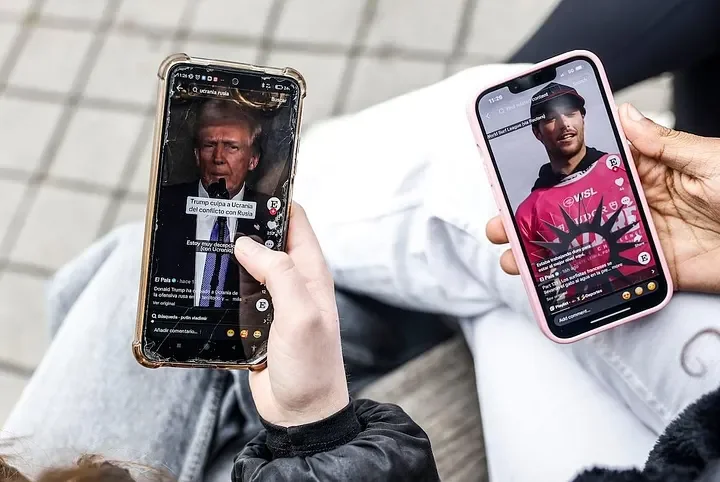
Russian influence operations have become increasingly sophisticated, appearing as trusted news organizations and other credible institutions while exploiting social media and artificial intelligence to spread fabricated narratives. Beyond disseminating false information, their operations seek to undermine our trust in legitimate sources of information, making it harder for us to distinguish fact from fiction and make independent, informed decisions.
In my experience, these operations leave fingerprints, and you don’t need a security clearance to spot them:
Be wary of an explosive accusation from an account that didn’t exist a month ago.
Be skeptical of a first-person video from a “former student” or “insider” no one has heard of. Check the web address behind a familiar news logo.
And when a post makes you angry and agitated at the same time, pause. That reaction is exactly what the disinformation was designed to produce.
We all need to examine the information, check the sources, and ask ourselves whether we believe something simply because it reinforces our existing conviction or belief.
We have two weapons and defenses against Russia and other adversaries. We need to return our institutional capabilities to operational full speed and power, and we need citizens, individually, to recognize manipulation and refuse to participate in it.
We do not have to agree on everything to share a love of our country and a commitment to our democratic system, imperfect though it is. When we focus on what unites us, we make it much harder for foreign adversaries to exploit what divides us.
This will not end with the Midterms. Be curious. Check the facts. Keep asking questions.
HOLD FAST and VOTE
Founded in 2016, The Steady State is a nonprofit 501(c)(4) organization of more than 450 former senior national security professionals. Our membership includes former officials from the CIA, FBI, Department of State, Department of Defense, and Department of Homeland Security. Drawing on deep expertise across national security disciplines, including intelligence, diplomacy, military affairs, and law, we advocate for constitutional democracy, the rule of law, and the preservation of America’s national security institutions.
