Pete Hegseth’s fixation on lethality ignores the lessons of America’s military history.
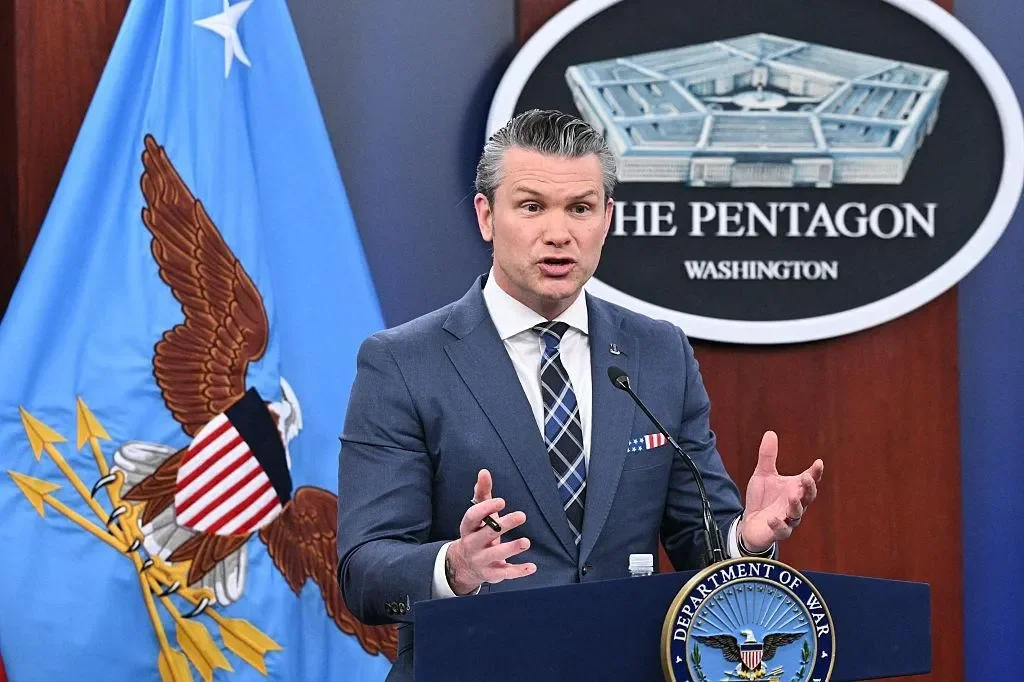
There is a dangerous misconception at the heart of Pete Hegseth’s approach to warfare: that killing more effectively means winning more decisively. It doesn’t. America has repeatedly demonstrated that military superiority can destroy infrastructure, degrade enemy capabilities, and kill enormous numbers of combatants without producing a successful political outcome. The war with Iran risks becoming another example. Ruthlessness may demonstrate power, but without a coherent strategy, achievable objectives, and a path to peace, it is simply destruction without victory.
Make no mistake, America was ruthless and lethal in World War II. The national leadership of that era, Presidents Franklin Delano Roosevelt and Harry Truman, demanded unconditional surrender of the nation’s enemies. To achieve that objective, the U.S. military fire-bombed cities in Germany and Japan, killing tens of thousands of non-combatants. U.S. and Allied armies obliterated the Third Reich. America then dropped two nuclear devices on Japan that killed tens of thousands more. The much-maligned atom bomb compelled the unconditional surrender of imperial Japan. The result of American ruthlessness was victory. Killing on an industrial scale was the means of achieving that end state.
It seems that the WWII result is something that the testosterone-obsessed Mr. Hegseth hopes to replicate. If so, he will suffer a tsunami of disappointment.
We know something today that we did not understand then. It is now well known that conventional aerial bombardment has the opposite effect desired. It tends to strengthen your enemy’s resolve. You need only look at current events in both Ukraine and Iran to see this phenomenon in action. However, it appears that this administration doesn’t learn from its mistakes but continues to double down on a clearly failing strategy. War and our knowledge of war have evolved. Wars of choice are quite different from wars of necessity. Mr. Hegseth never got the memo.
The ruthlessness adopted by Roosevelt and Truman may have been based in their fear of the possible existential threat posed to the American state. Most Americans came to accept the fact that Nazi Germany was an evil that required eradication, and Imperial Japan’s surprise attack on Pearl Harbor was despicable and demanded a response. But North Vietnam, Afghanistan, Iraq, and now Iran never reached that level of threat.
Estimates of WWII casualties in both the European and Pacific theaters exceeded seventy million dead. The majority were civilians. That sad total constituted over 3% of the world population. Russia and China made up approximately half of that total. It was by any measure the deadliest human-made conflagration in our recorded history. The horrors inflicted upon civilian populations were unprecedented in both intensity and scale.
The result of those horrors was the Geneva Convention signed in 1949: an attempt by the victors to conduct future wars with an eye toward legality and humanitarianism; a noble aspiration. No more Holocausts. No more summary executions of prisoners of war. No more torture. No more medical experimentation on captives. No more destruction of civil infrastructure without pressing and legitimate military needs. It is a better way of war, one that recognizes our collective humanity.
Union Civil War Gen. William T. Sherman was right: “War is hell.” Killing is required. Innocents will suffer and die. It is tragic. It is brutal. It is bloody. War was never kind or compassionate in character. It is all the more important to adhere to the policy that war should be the last possible option, once all hopes for settling disputes via reason and compromise have failed.
The nation can and should mitigate suffering whenever possible and based on values reflected in International Humanitarian Law. However, assuming a just war, the desired end state can be humanitarian in character, but the means, killing, never will be. These two truths do not easily occupy the same political space.
Uniformed U.S. citizens in Afghanistan fought legally and honorably, at least by way of comparison with their adversaries, who did not choose to follow the well-meaning edicts of a convention they never signed. We could have killed the majority of men, women, and children of the Taliban. But we didn’t, and we probably won’t engage in any like strategy in the future. I say “probably” because this president appears capable of damned near anything. Is it this administration’s intent to simply keep killing in the vain hope of achieving something that Mr. Trump can falsely label victory?
The US Department of State recently removed non-essential staff from four embassies in the Middle East. Does this decision represent a move toward planned escalation? If this White House is to be believed, the conflict with Iran may restart in earnest following the mid-term elections. Is Mr. Hegseth planning more of the same strategy?
The regime in Iran is heinous. But so are many others around the globe. Why now? The threat of an atomic device has been “obliterated,” according to this president. Why Iran? The country threatened is Israel and not America. How does this administration hope to achieve victory? There is none on the horizon.
In our past, America largely assumed that military might, alone, would be enough to bring North Vietnam, Afghanistan, and Iraq to heel. It wasn’t. This war in Iran is one of choice and not of necessity, has an ever-changing set of objectives and no exit strategy. Hegseth assumed that destroying the Iranian Navy and degrading their warfighting capacity would turn the tide. It has not. Ruthlessness and lethality can fill graveyards but will not bring this conflict to a successful “winning” conclusion. The self-styled Secretary of “War” seems to believe that more bombs and missiles will do the job. They will not.
Founded in 2016, The Steady State is a nonprofit 501(c)(4) organization of more than 450 former senior national security professionals. Our membership includes former officials from the CIA, FBI, Department of State, Department of Defense, and Department of Homeland Security. Drawing on deep expertise across national security disciplines, including intelligence, diplomacy, military affairs, and law, we advocate for constitutional democracy, the rule of law, and the preservation of America’s national security institutions.