
The global populist wave that helped propel Trump may be starting to recede.
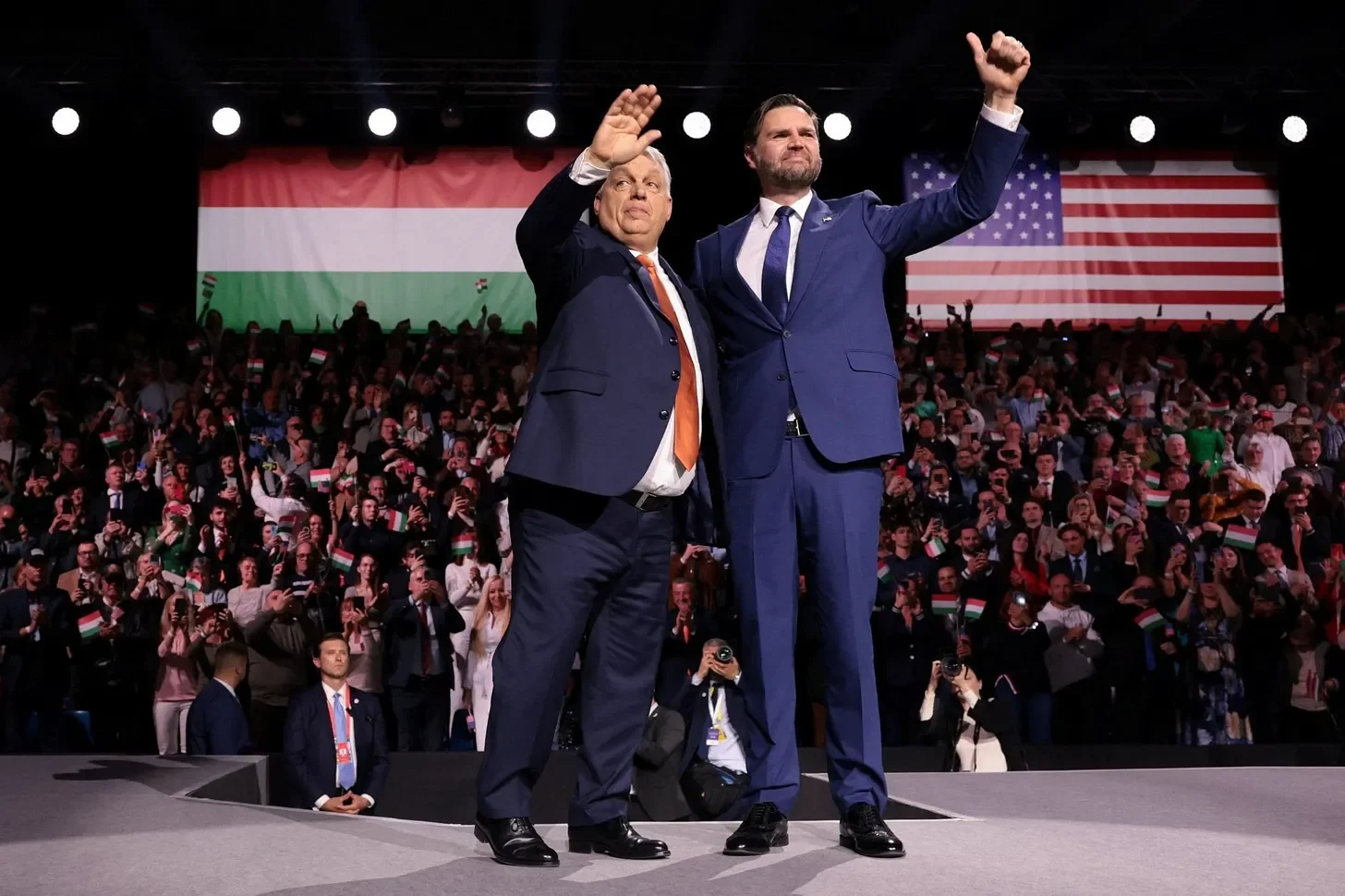
Vance says Europe is Meddling in Hungary Election as he backs Orban in Budapest, April 2026, (REUTERS)
Trump’s electoral defeat could mark a turning point for the global far right. Movements that once benefited from their association with MAGA may now find that Trump is more liability than asset.
Beginning during Trump’s first term, and increasingly in his second, MAGA has portrayed itself as part of a great global trend. The catastrophic results of the midterms undercut this narrative and are likely to lead right-wing movements abroad to distance themselves from Trump.
Particularly in Europe and Latin America, the Trump administration has promoted Trumpian populists who have campaigned on similar issues—immigration, ‘traditional’ values, crime, nationalism, and the need for a strong leader willing to do ‘what’s needed.’ Trump’s re-election in 2024 helped right-wing parties abroad, and vice versa, by creating the impression of an irresistible populist tide.
MAGA’s assistance has gone well beyond sharing similar worldviews. MAGA donors have funded a regular exchange of resources to help win elections. The Trump administration recently redirected millions of dollars in State Department democracy funds, intended to support democracy movements in authoritarian countries, to help right-wing parties in Europe and Latin America. The State Department has appointed a raft of Ambassadors, such as Charles Kushner in France, whose main job is to coordinate with right-wing movements, while bad-mouthing their host countries. State Department envoys like Samuel Samson, Deputy Assistant Secretary of the Bureau of Labor and Human Rights, and Sarah Rogers, Under Secretary of State for Public Diplomacy, have fanned out regularly to show solidarity with right-wing activists, backed by finger-wagging speeches from Vance and Rubio about Western decadence and the need to man up and be more like Trump.
In Europe the favored allies have included Victor Orban in Hungary, Nigel Farage in Great Britain, Marine Le Pen in France, the AfD in Germany, Aleksandr Vucic in Serbia, and Giorgia Meloni in Italy. Vladimir Putin is very much in the picture, as is Benjamin Netanyahu. In Latin America Brazil’s Bolsonaro family was at the top of the list, which also included Javier Millei in Argentina, Bukele in El Salvador, de la Espriella in Colombia, and Jose Antonio Kast in Chile.
But this synergy may be coming to an end.
Even before Trump’s decisive repudiation at the polls, his mojo was fraying. Orban was ousted in Hungary in April, despite a direct endorsement from JD Vance. Meloni broke with Trump in June following his disparaging remarks about her after a G7 Summit. Jordan Bardella, a leading figure in France’s National Rally party, criticized Trump over the summer as ‘erratic’, citing his threats to annex Greenland. Bolsonaro, who campaigned with giant inflatable Trump dolls, was badly beaten in October in an electoral runoff he expected to win. He had to flee Brazil to escape a judicial investigation into US interference in the election focusing on the Rockbridge Network, a MAGA-affiliated influence machine co-founded by JD Vance. Netanyahu’s campaign featured pictures of him, together with Trump, gazing into the blue; in the October 27 election Netanyahu’s coalition lost 11 seats. Pro-Russian strongman Vucic went down to defeat in an October election, derailing the American Conservative Political Action Committee’s plans to hold its annual conference in Belgrade.
Now that Trump has been handed an enormous electoral setback, it is hard to see that being affiliated with him will appeal to foreign politicians. He is a lame duck whose administration is about to be subjected to investigations and possible lawsuits. He has made a series of policy blunders—the Iran war, tariffs, threatening NATO, siding with Putin against Ukraine—that are unpopular with voters in Europe and much of the world. His behavior has become erratic and unfocused. Prime Minister Pedro Sanchez of Spain said the US election returns showed a global surge of far-right parties was “no longer growing: It is collapsing.”
Right-wing ideologues and movement activists in America will try to keep alive the image of a great global force with Trump at the center. Concern that he could lash out during the two years remaining in his Presidency may limit the willingness of populist politicians to criticize him publicly. But pressure will be intense from donors and activists to distance themselves from Trump, much of whose appeal came from his “winner” persona.
As the song says “No one knows you when you’re down and out.”
Founded in 2016, The Steady State is a nonprofit 501(c)(4) organization of more than 450 former senior national security professionals. Our membership includes former officials from the CIA, FBI, Department of State, Department of Defense, and Department of Homeland Security. Drawing on deep expertise across national security disciplines, including intelligence, diplomacy, military affairs, and law, we advocate for constitutional democracy, the rule of law, and the preservation of America’s national security institutions.