The Trump Enterprise: Government Meets Family Business
The presidency is a constitutional office. The Trump Organization is a business. The Trump family is a family. The Enterprise is the intersection.
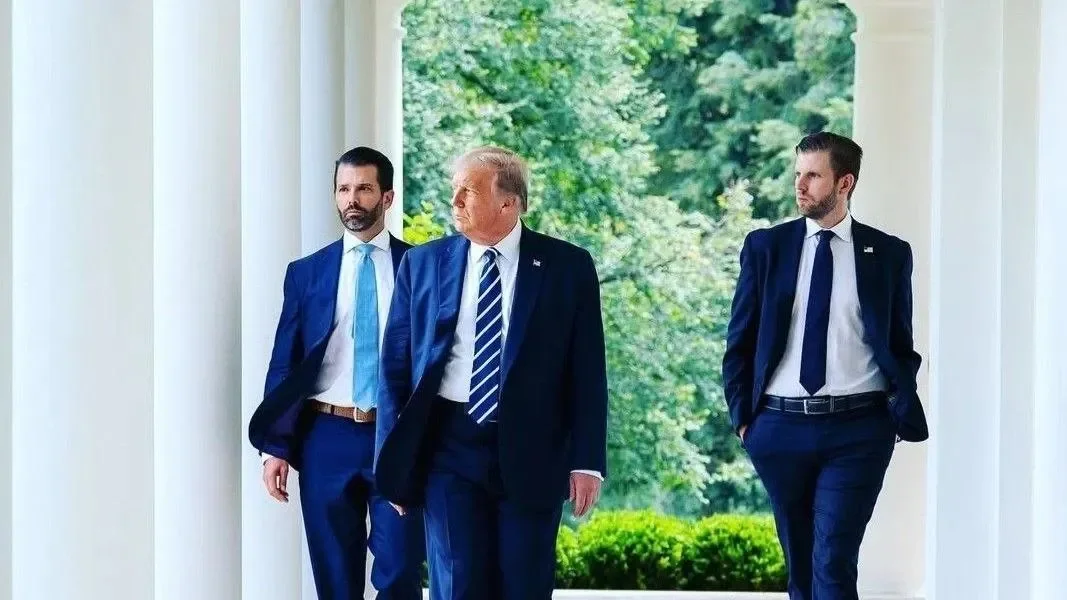
The danger is not simply that a president owns businesses or has a wealthy family. The danger arises when the boundaries between public authority and private interest become blurred. To recognize and scrutinize that intersection, we first need to name it: the Trump Enterprise.
The presidency, as an institution, belongs to the American people. The President of the United States is an office created by the Constitution, with defined powers, duties, and limitations. It is not a family business.
The American constitutional democracy and its government depend upon such distinctions: Public and private. Officeholder and citizen. Government property and personal property. Public duty and private interest. During the last two years, many of the activities that raise questions about conflicts of interest, self-dealing, or the intersection of public and private power do not involve this presidency as an institution. And as these boundaries become blurred, actions can become Constitutional threats. Language needs to clarify them.
We require a broader vocabulary .
The difficulties Americans face in talking about the extraordinary convergence of political power, private business, family interests, and personal relationships surrounding Donald Trump is surprisingly basic: we do not have a good name for it.
We often cite “the President.” Yet many of the activities they raise involve Donald Trump, the individual.
Or we say “Trump.” But that can be equally misleading. Sometimes what we actually mean is the Trump Organization and the network of corporations, limited-liability companies, partnerships, licensing arrangements, and other business interests associated with the Trump name.
Or sometimes we mean the Trump family: his sons and other relatives, their businesses, their partners, and their commercial relationships at home and abroad. Sometimes we mean Jared Kushner or other members of the extended family and their separate business interests and relationships.
And sometimes we mean something broader still: the collection of business partners, investors, advisers, political allies, associates, and other individuals and entities whose interests overlap with those of Donald Trump and his family.
These are not all the same thing. They do not necessarily share the same legal ownership, organizational structure, or interests. Yet in public life, they can intersect in ways that make our ordinary vocabulary inadequate.
There is, however, a word that captures the concept surprisingly well: “Enterprise.”
The term comes naturally to lawyers because it appears prominently in the federal Racketeer Influenced and Corrupt Organizations Act (RICO). Under that statute, an “enterprise” can be an individual, partnership, corporation, association, or other legal entity. But importantly, it can also be “any individual, partnership, corporation, association, or other legal entity, and any union or group of individuals associated in fact although not a legal entity.”
That is the useful insight here.
An enterprise does not have to be a single corporation. It does not require everyone involved to work from the same organizational chart. It describes something broader: a collection of people and entities whose activities are sufficiently interconnected that sometimes the whole matters as much as its individual parts. That gives us a more precise way to describe what critics of the current administration are trying to identify when they discuss the overlap among presidential power, Trump family interests, and Trump-associated businesses.
“The Trump Enterprise,” as used here, includes Donald Trump when he acts in his personal or commercial capacity. It includes the Trump Organization and relevant affiliated businesses. It includes family members when they participate in related political or commercial activities. And, where the facts warrant it, it can include business partners, associates, and others participating in particular ventures or arrangements.
When we mean President Trump exercising the constitutional powers of his office, we should say the President or the Trump administration. When we mean Donald Trump personally, we should say Donald Trump. When we mean a particular company, family member, or business transaction, we should identify it specifically.
But when we are describing the larger phenomenon, the intersection of political power, family, business, money, associates, and overlapping interests, we need a term capable of encompassing the whole.
The Constitutional Danger
Indeed, it is here in which the danger to our democracy lies: the potential interaction among all of these, resulting in the entanglement of public authority and private interest.
I am not suggesting that invoking the word enterprise alone establishes a RICO violation. The legal requirements for such a case are separate and demanding, although, as argued elsewhere, may be apt. But the terminology matters because the concern is larger than any particular hotel, cryptocurrency venture, overseas development, family member, presidential decision, or business transaction. We need to clearly describe the phenomenon and be precise enough not to confuse its individual components.
Words matter.
And when we mean the larger constellation, Donald Trump, family interests, affiliated businesses, partners, associates, and the network through which political and commercial interests can intersect, there is a word for that: The Trump Enterprise.
Founded in 2016, The Steady State is a nonprofit 501(c)(4) organization of more than 450 former senior national security professionals. Our membership includes former officials from the CIA, FBI, Department of State, Department of Defense, and Department of Homeland Security. Drawing on deep expertise across national security disciplines, including intelligence, diplomacy, military affairs, and law, we advocate for constitutional democracy, the rule of law, and the preservation of America’s national security institutions.