Bringing the Gang Back Together Again
What happens when the government uses sensitive personal data to decide whether you are eligible to cast a ballot?
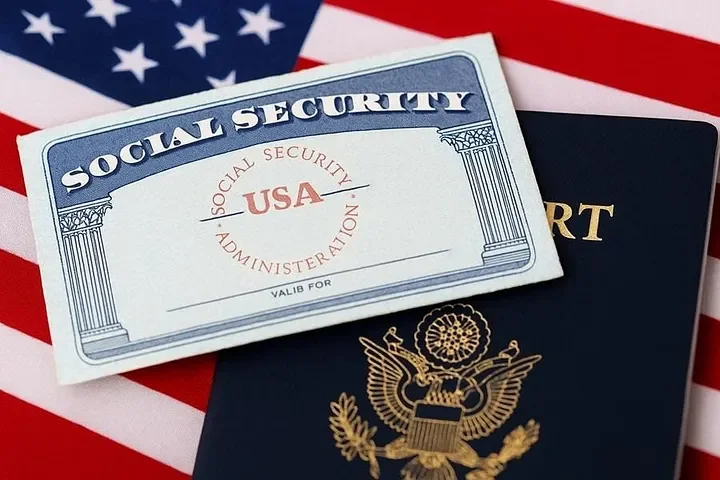
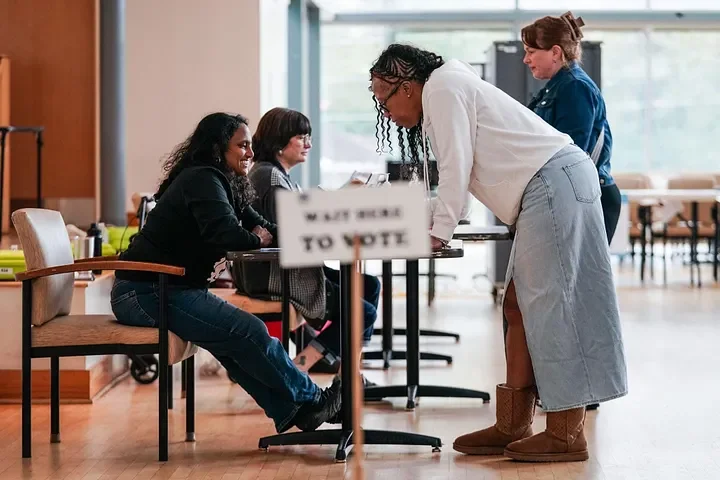
Your Social Security record was created to administer one of the government’s most sensitive programs—not to determine whether you get to vote. The Supreme Court’s latest Shadow Docket ruling makes that distinction considerably less clear.
The Roberts Six recently went two separate ways on a significant voting case when the Supreme Court struck down the Administration’s effort to prevent voting by mail during the upcoming midterms. Similarly, when the Missouri Republican Party attempted to use a gerrymandered map that the Missouri Supreme Court had declared illegal under Missouri law, the Supreme Court intervened three separate times to ensure that Missouri elections were consistent with Missouri law. There were no noted dissents, which is a rare act of unanimity from a Court that is so ideologically and politically divided. In both of these cases, the decisions appeared to go against the interests of the Republican party.
The old gang recently got back together, however, in a recent Shadow Docket decision that is likely to lead to some voters being disenfranchised based on inaccurate information provided by the federal government.
While a complicated case, it involves both voting rights and, of equal importance, the Government’s use of Social Security Administration data that contains sensitive personal information of over 300 million people, both citizens and non-citizens.
The database at issue is something called the Systematic Alien Verification for Entitlements (SAVE) data base. Note that the SAVE data base is different from the vote-restricting SAVE Act that the Republicans have been unable to pass despite constant lobbying from Trump. The SAVE data base has been around since 1986 and is used to verify eligibility for benefits like Medicaid and food stamps, which by law are limited to citizens and those legally in the United States. It is run by the Department of Homeland Security (DHS), and is used by 27 states for voter identification verification purposes. It has never contained information related to citizens who were born in the United States until a Trump Executive Order directed the Social Security Administration to make its master data base available to state and local governments via the SAVE system. This is the same Executive Order (EO 14399) that was at the heart of the unsuccessful effort to upend mail-in voting during the mid-terms.
The Executive Order contained another troubling expansion of unchecked sharing of mass data within the US Government. While data sharing certainly increases efficiency, data maintained by the Social Security Administration has always been set apart because of its sensitivity. Prior to this Executive Order, states and local governments could submit individual requests to the SAVE data base. The new venture links Social Security data to the SAVE system and allows bulk queries based on partial social security numbers, which means that privacy data protected by statute is being downloaded in bulk by state and local governments.
Social Security records are not supposed to be used like that. The master social security data base, called NUMIDENT, is the one that DOGE allegedly accessed in 2025; a whistleblower complaint currently is under investigation. These efforts allegedly resulted in the personal privacy data of over 300 million of Americans being moved to a thumb drive with the intent to provide it to a private contractor. The privacy restrictions contained in Social Security legislation are among the most stringent in existence, and are designed to protect information that all people in the United States must provide to Social Security. Yet, the Roberts Six, through a Shadow Docket ruling, decided it was not necessary to determine whether the Executive Order was sufficient to overcome such statutory privacy protections.
Unlike the effort to restrict mail-in voting, which would have affected millions, only a limited number of eligible voters are likely to be affected by this ruling. Still, the right to vote is at the heart of our rights as citizens in a democracy. The use of the social security data base, which does not track naturalization and thus is not particularly useful for determining citizenship, has never been used in this way.
On the 250th anniversary of American independence, we should reflect on the fact that our Government continues to be a government of limited, not absolute, power. The right to privacy is fundamental to the Fourth Amendment. In chasing the chimera of non-citizens voting, the Roberts Six has endorsed a powerful (mis)use of social security data that may make it difficult for a small number of citizens to exercise their right to vote, but is yet another assault on the privacy rights that every citizen should enjoy. And if you are a naturalized citizen in a state that relies on the SAVE data base, be sure to check your eligibility to vote in time to prove that you are a citizen.
Founded in 2016, The Steady State is a nonprofit 501(c)(4) organization of more than 450 former senior national security professionals. Our membership includes former officials from the CIA, FBI, Department of State, Department of Defense, and Department of Homeland Security. Drawing on deep expertise across national security disciplines, including intelligence, diplomacy, military affairs, and law, we advocate for constitutional democracy, the rule of law, and the preservation of America’s national security institutions.