THE U.S. RETREAT FROM THE UNITED NATIONS: AUTHORITARIAN ABSURDITY
The Steady State | By Annie Pforzheimer
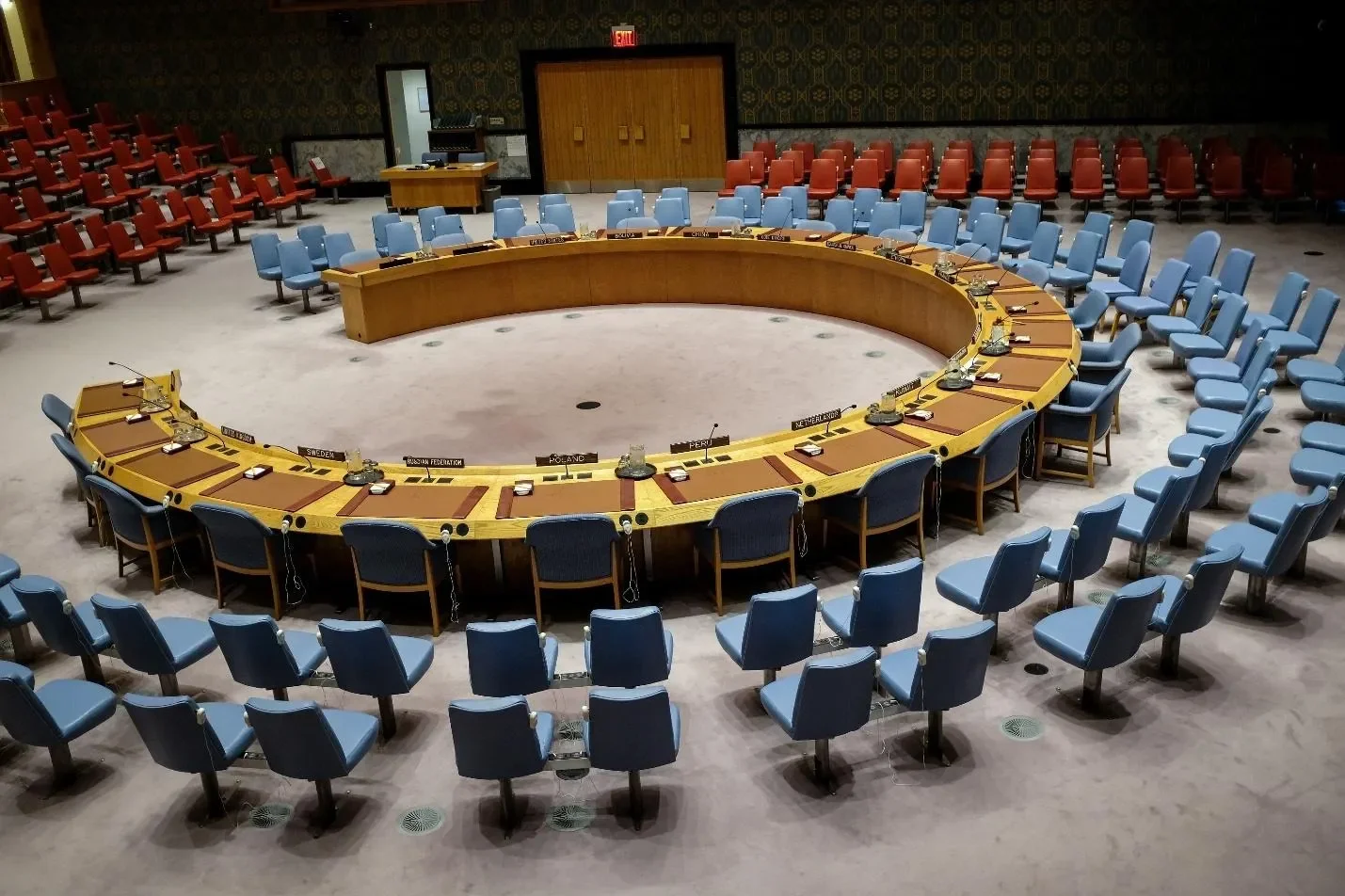
With sweeping language alluding to power and national interests, in early January 2026 the White House announced its intention to withdraw the United States from 66 multilateral bodies that monitor a wide range of issues including international health, peacebuilding, climate change, and even children in armed conflict. Absurdly padding the list, the U.S. is withdrawing from multiple organizations it does not fund, with the practical impact solely that it will not attend meetings and our nation will lose any influence it may have had.
An authoritative analysis of this policy decision, from the Center for Strategic and International Studies, flags the risk posed by “a la carte multilateralism” to key national interests such as shaping international law, advancing conflict resolution, and facing off against China’s influence in developing nations.
The stated basis for withdrawal from the multilateral sphere, which carries negligible economic benefit and substantial loss of influence, is that international organizations entail obligations and responsibilities that could unhelpfully hamper the United States. This argument is an ideological mirror and counterpart to the unitary executive theory so enthusiastically espoused by the current administration, which justifies the predomination of presidential power over that exercised by legislative, legal, judicial, and state bodies.
The notably non-radical Wall Street Journal recently raised questions about the wisdom of “America First” becoming “America Alone” – because history shows it is inefficient and risky to alienate allies and go up against problems alone. The current U.S. posture of freely spending to conduct naval operations around the world in order to dominate in the Caribbean, Persian Gulf, and Pacific Ocean, engaging in air wars or special operations, flying drones with or without basing agreements, and otherwise projecting power leaves us little bandwidth if a disaster were to strike. Unlike after Pearl Harbor or 9/11, well-armed allies are feeling ambivalent about their relationship with the United States. Without them, however, we risk falling into yet another authoritarian trap - external emergencies are a gateway to further repression at home, as Iran and Russia demonstrate.
The argument regarding cost is equally absurd. While much is made of the U.S. dues to the United Nations, which hover between 22 and 25 percent of the budget, the math is clear: we pay a fraction of the whole, and the rest of the world pays over three-quarters of the cost of achieving goals we have helped to set. This applies to peacemaking and peacekeeping in regions that matter for humanitarian, economic, and geopolitical reasons – such as the Middle East and Africa’s Great Lakes regions. It also applies to paying for the global fight against organized crime, drug trafficking, trafficking in persons, and terrorism.
The U.S. departure from some of the smaller multilateral organizations and agencies, especially those leading the way in scientific analysis of worldwide disease and climate risks, will weaken these institutions – and we will need to reconstitute them in the future, at greater expense, since there is no likelihood of being able to manage these issues alone. Global problems need a coordinated, multilateral response; the system of nation states, with roots in the 1640’s, is arguably antique and inappropriate in many cases. Could the United States protect its population against global warming’s possible 23-foot sea rise by issuing port-of-entry bans or building seawalls more than 95,000 miles long along the U.S. coastline? Could you levy a tariff on an air-borne pathogen and prevent a pandemic without shutting down your own economy?
As unfettered executive power is a hallmark of authoritarianism, withdrawal from international obligations is the hallmark of unilateralism, with a side order of isolationism – postures Americans have deeply regretted in the past and which, in today’s complex world, are especially disastrous.
Founded in 2016, The Steady State is a nonpartisan, nonprofit 501(c)(4) organization of more than 360 former senior national security professionals. Our membership includes former officials from the CIA, FBI, Department of State, Department of Defense and Department of Homeland Security. Drawing on deep expertise across national security disciplines including intelligence, diplomacy, military affairs and law, we advocate for constitutional democracy, the rule of law and the preservation of America’s national security institutions.