
Trump: Big Talker, Pitiful Leader – What Has He Achieved?
Bluster and Bombs are leaving the US Weaker and the Region More Dangerous
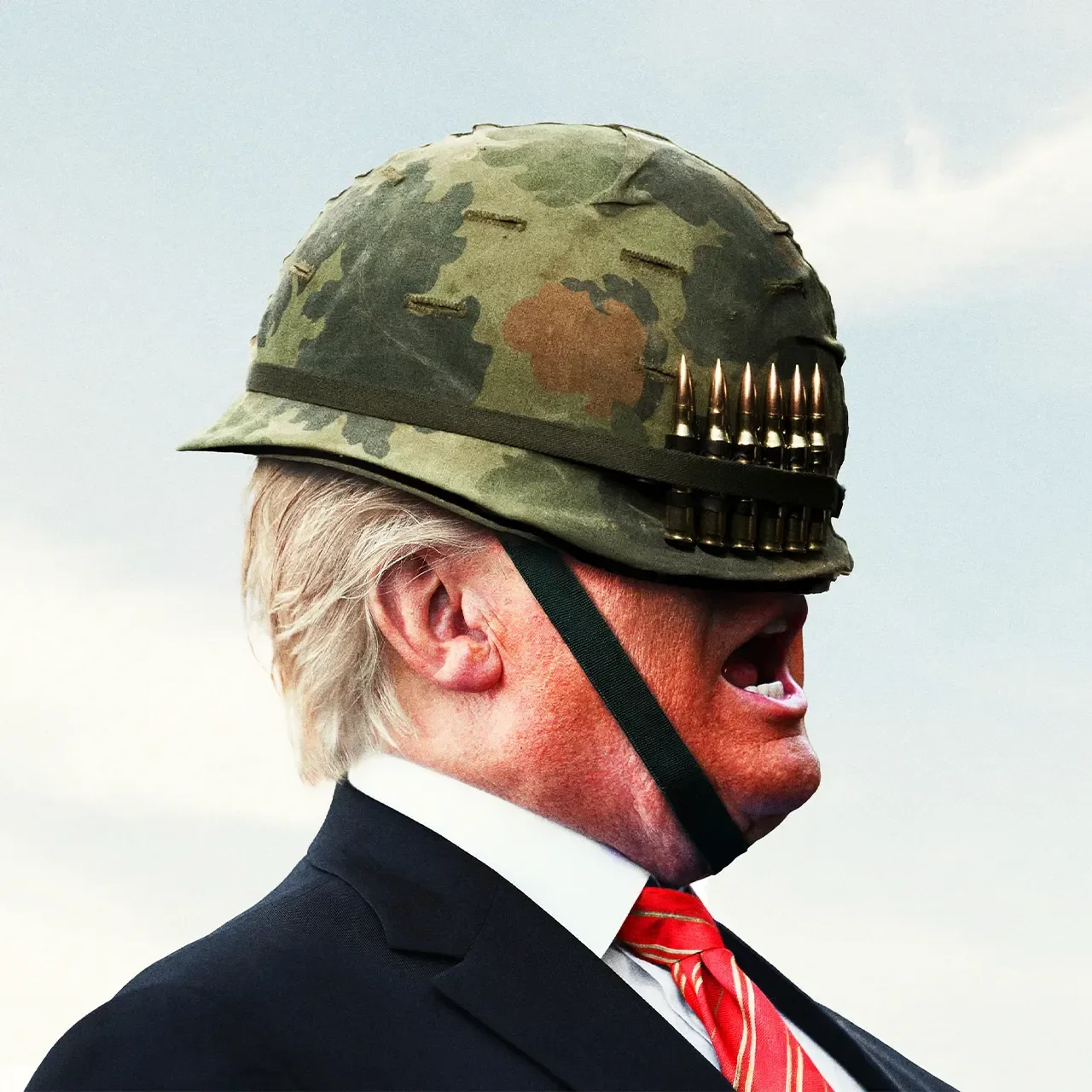
The Economist, March 21, 2026: “Operation Blind Fury”
Donald Trump’s campaign against Iran has cost lives, cash, and credibility, achieved almost nothing strategic, deepened global chaos and mistrust, and exposed a presidency that reflexively prefers spectacle over a sober plan.
During five weeks of war on Iran, the President of the United States and his acolytes have showered us with words, often contradictory or nonsensical, to persuade us not to trust our eyes and judgment that his war has not gone well. According to polls, this tactic is backfiring, with the public opposed, Congressional Democrats finally finding their footing to object, and even normally noisy loyalists voicing doubt and criticism. Meanwhile, Trump’s bombastic threats to create even more havoc, the worries of a world thrown into economic chaos, and galloping gasoline prices here at home have swept us up in an increasingly anxious wave. The April 7 announcement of a two-week cease-fire is welcome news, but whether the agreement holds, might be extended, or if fighting might resume is all unknown at this point. (More on that below.)
It’s worth taking a moment to remember how little information we had to go on in the days leading up to the February 28 Israeli-American attack. In a February 25 Steady State post, I listed some of the pertinent questions to ask about U.S. intentions. Rereading this list, it is shocking, but not surprising, how many of these questions remain unanswered or have been obscured by the Administration’s confusing and often absurd rhetoric.
Here are some excerpts.
“Once again (after the Venezuela operation) , the President of the United States is contemplating the use of American military might overseas and has prepared an enormous force for attack, this time on Iran. And yet once again, despite the seriousness of doing so, he has not consulted Congress, explained to the American people why such a step might be in the American national interest, or made any effort to solicit support from either. These facts alone demonstrate Presidential malpractice and endanger Americans – at home, living and working in the Middle East, and in uniform – as well as citizens of the region.
“It is perhaps understandable that Trump and his people see a particular opportunity to break the regime’s grip on the country. Trump’s record demonstrates that he favors brief, splashy actions to achieve his objectives, with the hard work of planning to deal with the consequences saved for later. The idea seems to be, in typical Trumpian fashion, to cow the Iranians into submitting to American demands to abandon uranium enrichment, send any remaining stocks overseas, abandon its missile programs, and cut off all support to its proxies in the region.
“Does Trump think that air power and missile attacks will frighten the Iranians into “capitulation,” as he put it? Does he think that force will be the last straw that breaks a weakened regime’s back? Does he think that air power alone can eliminate both the clerics and the powerful Iranian Revolutionary Guard Corps (which itself possesses great political, military, and economic resources)? (Note: Apparently, according to a remarkable piece of reporting this week in the “New York Times” – How Trump Took the U.S. to War With Iran - The New York Times – the answer to these questions was “yes.”) If so, whom, if anyone, does he foresee capable of assuming power in Iran? What kind of Iran emerges from such turmoil?
“Crucially, how long does Trump think force would continue to be necessary in order to bring about any of these still undefined objectives? What does Trump think the risks to the U.S. and to American lives (including Americans already in the region, or forces in combat) of what is likely to be an open-ended effort might be? Has anyone planned how to minimize or counter those risks? In short, what is the goal? And what is the price likely to be?”
To Trump’s great frustration and even puzzlement, the Iranians did not cave in. (At various times, his threats have also included a promise never to “permit” Iran to have a nuclear weapon and destroying the Iranian regime to allow the country’s popular opposition to seize power.) That left him with only two tools: negotiation and the use of force. How serious the U.S. pre-war negotiation effort was can be debated, but the U.S. side, while making its maximum demands public, never had a good grasp of what Iran might have been persuaded to do. How serious Iran was we do not know, but it persuasively argued that it was merely being handed an ultimatum, rather than any prospect of compromise. That the February 28 attack was launched while the Iranians, the Omani mediators, and others still expected the talks to continue merely hardened Iran’s suspicions. Trump again has been frustrated and puzzled that despite enormous physical damage to Iran, and the loss of hundreds of its senior officials, using force has not worked, either.
So what has Trump achieved, after billions of dollars, thirteen American deaths, hundreds more wounded, a number of destroyed American aircraft, going on 2000 dead Iranians, more death and damage in friendly regional states (including civilian deaths in the other attacker, Israel), and shipping in one of the world’s most crucial waterways brought to a halt?
Shockingly, but also not surprisingly, very little. Iran was not close to developing a nuclear weapon and is now presumably yet further away, but there is absolutely no reason to suppose that its successor leaders, in their rage and isolation, will be willing to give up any such aspiration. Iran retains its stocks of enriched uranium, which are presumably mostly still buried after last June’s Israeli-American raids, but they are beyond the U.S.’ grasp unless it is willing to undertake a very risky and probably foolhardy mission to retrieve them. There is probably little left of the Iranian capacity for further enrichment, but without outside monitoring, it would not be hard to rebuild that capability. The Iranian Revolutionary Guard Corps’ grip on the country remains in place. While Iran’s missile and drone stocks have been badly depleted, it can still wreak painful damage on their targets and could continue to do so if the ceasefire breaks down or expires. And there is no reason to suppose – except possibly that Iran might now physically find it harder to do – that its willingness to support proxy forces in the area has decreased. Trump’s erstwhile promise to brave Iranians on the streets – “Help is on the way” – evaporated weeks ago. And it has been pointed out many times that we have alienated American allies and strengthened our adversaries.
The U.S. military has moved personnel away from vulnerable bases to presumably safer housing in local offices and hotels. While the motive may be laudable, it is hard to distinguish this action from using civilians as humans shields, a war crime and something the U.S. has always regarded as repugnant. Trump has only ever mentioned shifting timelines and expiring deadlines to indicate how long he thought hostilities might continue. And he has never leveled with the American people about what price, in money and lives, he intended that we should pay – or continue to pay, should fighting resume in order to “finish the job.”
Before February 28, the Strait of Hormuz was open, and there was no threat of its closure. Through U.S. blundering, the Strait was closed; reopening it evolved to a principal war aim. Unfortunately, that is the sole accomplishment of the cease-fire agreement; it represents no progress toward American goals. Moreover, it leaves the Strait under Iranian military control, a condition that also did not exist in February. Regardless of whether fighting might resume, that control is something that neither importers around the world nor exporters in the Gulf can likely live with.
Trump insists that new negotiations with Iran have already started – to all appearances, a massively wishful claim. As far as we can tell, even the ceasefire was the result of frantic and complicated diplomacy by Pakistan, China, and others. Trump is likely to think that his wild threats this week to end Iranian civilization had a major intimidating effect, but there is no evidence other than coincidental timing to support this. Even if and when serious negotiations begin, progress is likely to be slow, given their inherent difficulty and what is now an even wider conceptual gulf between the antagonists. In fact, Trump’s declaring Iran’s “Ten Point Plan,” – actually a list of its maximum, unacceptable demands – a “workable basis” for talks is already a mistake. And content aside, accepting the other side’s proposals as a negotiating baseline, as every diplomat knows, puts you at a disadvantage.
It is hard to know whether Trump and his circle of yes-men have grasped the obvious seriousness and enormous costs of their strategic blundering. His proclamations of victory are so hollow that one wonders whether even he believes them. But what is certain is that every time Trump opens his mouth to crow about American greatness, he delivers instead one more agonizingly painful proof of how he has weakened the United States.
Founded in 2016, The Steady State is a nonprofit 501(c)(4) organization of more than 400 former senior national security professionals. Our membership includes former officials from the CIA, FBI, Department of State, Department of Defense and Department of Homeland Security. Drawing on deep expertise across national security disciplines including intelligence, diplomacy, military affairs and law, we advocate for constitutional democracy, the rule of law and the preservation of America’s national security.