America’s Elections: Trust Us, Don’t Verify
By turning away international observers, the Trump administration abandons a democratic commitment the United States once championed.
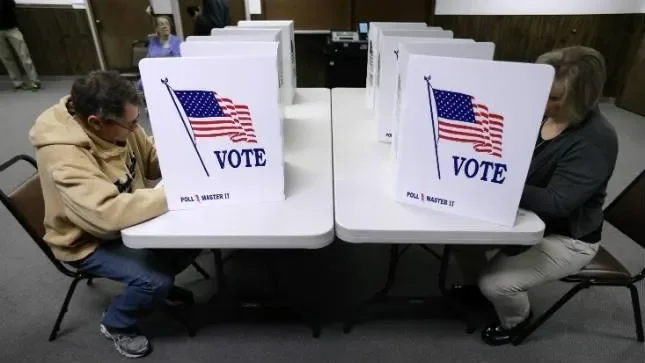
For decades, the United States welcomed international observers to assess its elections and encouraged other nations to do the same. The Trump administration’s decision to break with that practice sends a troubling message: America is no longer willing to accept the scrutiny it expects of others. Democracy depends not on demands for trust, but on transparency and accountability.
The Trump administration’s decision not to invite international election observers to the November midterm elections is more than a break with tradition. It is a repudiation of a commitment the United States has made to the international community and another sign of our country’s slide toward authoritarianism.
For more than two decades, the United States welcomed election observers from the Organization for Security and Cooperation in Europe (OSCE) and its Office for Democratic Institutions and Human Rights (ODIHR). The administration’s refusal to invite them in 2026 breaks with that longstanding practice. The OSCE called the decision “regrettable.” Others were more blunt (see below).
We made these commitments for a reason
The OSCE is not some foreign institution imposing its will on American voters. Its 57 participating states, including the United States, agreed in the 1990 Copenhagen Document that international election observation can strengthen democratic processes. They committed to inviting observers from other participating states. These are reciprocal commitments. We expect other countries to demonstrate that their elections are free and fair, and we have agreed to accept the same scrutiny ourselves.
Have other OSCE participating states refused election observers? Yes. Both Russia and Belarus have restricted meaningful independent election observation, and both have resisted the kind of international scrutiny that can expose flaws in electoral processes.
Is that seriously the kind of company we want to keep?
Dan Baer, who served as U.S. ambassador to the OSCE under President Obama, said in a recent MSNOW interview, “refusing election observers is usually something that countries in a position of weakness do, when they know that they have corrupt or unfair elections.” Senator Jeanne Shaheen (D-NH) called the decision “deeply antithetical to the spirit of freedom, democracy and transparency that defines our elections.”
These are sobering assessments from people who understand the purpose of election observation. Refusal does not prove that the 2026 elections will be unfair. But it raises a legitimate question.
Why would a government confident in its electoral system turn away an independent, experienced body that has observed our federal elections for more than two decades?
First Hand Observation
As Ambassador and Head of Mission at the OSCE Mission to Bosnia and Herzegovina, I worked closely with OSCE/ODIHR election observers who came to the country to monitor elections. I saw the value of their work. They brought an independent, disciplined and unbiased perspective to the electoral process.
They examined not only what happened on election day, but also the broader conditions in which elections took place, including the conduct of campaigns, the role of election administrators, media access, campaign financing, voter participation and the resolution of disputes. Their purpose was not to dictate outcomes or favor particular candidates. It was to assess whether the process met democratic standards and to give citizens and public officials a credible account of what worked and what needed improvement.
In countries where political divisions run deep and trust in institutions is fragile, that independent assessment matters enormously. Bosnia and Herzegovina knows all too well the consequences of political leaders undermining institutions for their own advantage. So much so that during their October 4, 2026 national elections, OSCE/ODIHR observers were once again present, just as they have been since the end of the 1990s war.
We have encouraged other countries to accept scrutiny precisely because transparency strengthens democracy. Our own election system should be no exception.
The Contradiction: Trump political advisors in Bosnia and Herzegovina
The refusal to invite observers becomes even more troubling when viewed alongside the activities of senior Trump political advisers in Bosnia and Herzegovina.
Recent reporting indicates that Chris LaCivita and James Blair, prominent Trump political advisers, traveled to Republika Srpska (RS), one of Bosnia and Herzegovina’s two constituent entities, to provide political and election-related advice to the RS government. That comes against the backdrop of efforts by RS leaders to strengthen ties with the Trump administration and advance their own political agenda.
Republika Srpska’s leadership, particularly Milorad Dodik, has repeatedly challenged the authority of Bosnia and Herzegovina’s central institutions. Those challenges threaten the Dayton peace settlement that ended the war and established the country’s constitutional framework. There is something deeply troubling about this juxtaposition: The White House political operatives are reportedly advising a politically controversial entity abroad on electoral matters, providing political support that risks further destabilizing the country; at the same time, the US government refuses to allow independent international observers to assess its own elections.
Authoritarianism Rejects Accountability
No one should pretend that the absence of ODIHR observers, by itself, determines whether an election will be free and fair. Fortunately, American election administration remains decentralized, with important responsibilities held by state and local officials. Nor does an invitation guarantee that every problem will be detected or resolved. But refusing independent scrutiny does suggest that the administration is less interested in demonstrating the integrity of our elections than in avoiding an independent assessment of them.
Authoritarian leaders need to weaken the institutions that provide accountability and discredit independent scrutiny to ensure that their own authority should go unquestioned. We should recognize these patterns when they emerge in our country.
The United States helped build an international system in which democratic governments agreed to hold themselves accountable to common standards. We cannot credibly demand that other countries honor those commitments while refusing to honor them ourselves. Democracy is not simply the act of casting a ballot. It depends on transparency, accountability, independent institutions and public confidence that the rules apply to everyone.
The administration’s refusal to invite OSCE election observers is a retreat from those principles. For those of us who have worked to advance democracy abroad, it is a particularly painful reminder of how much we now have to defend at home.