
Your Tax Dollars. His Campaign Ad.
When the government starts paying for political promotion, the line between public office and personal politics begins to disappear.
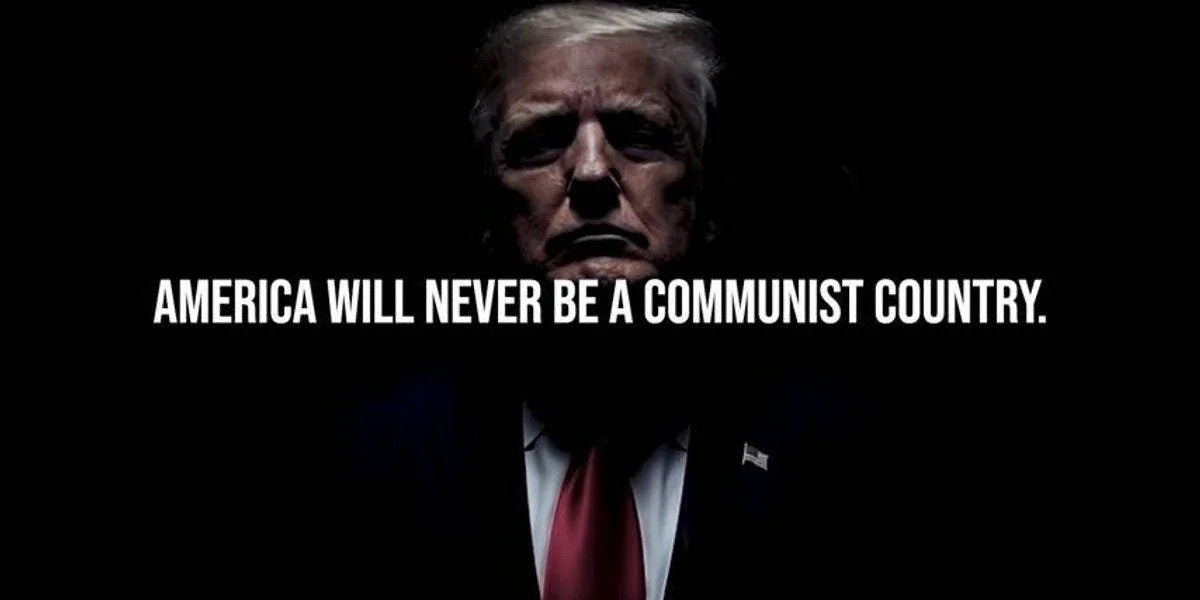
A screenshot from an ad for President Donald Trump posted by the White House on September 23, 2026, and labeled as “Paid for by the US Government.”
The Trump administration is using taxpayer-funded government advertising to promote a message centered on the President himself, including an ad that closely mirrors his 2024 campaign material. Whatever the legal outcome, the practice raises a fundamental question: when does government communication become political campaigning?
Recently, I was enjoying a Sunday afternoon of NFL football at my local bar, hoping my Vikings would continue a strong start to the season, when some ad popped up around halftime. At first I thought it was the generic political ad we see all the time, but then the words “Paid for by the U.S. Government” popped up. A couple of people in the corner of the bar started booing. I was enraged. If you want to run political ads, pay for them yourself. Why is our tax money going to this self-aggrandizing puffery? Isn’t using taxpayer money for political propaganda illegal? .
The ad I saw titled “Final Battle” was part of a series of 3 ads (so far) glorifying Trump. This particular ad was nearly identical to one that was created by the Trump campaign during the 2024 presidential election cycle but now paid for by the U.S. Government. Taken together, the ads amount to a taxpayer-funded campaign to build up Trump’s cult of personality. His voice and face are plastered all over the ad, making him the focus of every part of the ad
Trump and Speaker Johnson have made it clear that in the 2026 midterms that Trump is “on the ballot.” This is self-centered politics elevated into government policy: Trump putting himself first and treating the office he temporarily holds as an extension of himself rather than the Office he is temporarily entrusted to hold.
The deeper message of these ads is clear: Trump will use all the tools of government to keep power, and he will break any law that stands in his way. These actions send chills through the political space as Trump starts to use what he considers his bounty of millions of taxpayer dollars in the treasury in support of his political goals. As with many of his administration’s actions, he is flouting well-established norms and potentially illegal actions, brazenly during prime time.
Recent Wall Street Journal reports that the Department of Homeland Security organized and financed these ads, specifically through the U.S. Customs and Border Patrol. The same paramilitaries that invaded the streets of Minneapolis, killing US citizens, are now taking taxpayer dollars, meant to protect the US from legitimate threats, to stroke the ego of an authoritarian.
Propaganda and coercive security institutions have long been two pillars of authoritarian rule. Romanian dictator Ceaușescu cultivated an enormous state-sponsored cult of personality while his Securitate beat, imprisoned, and intimidated dissenters. Saddam Hussein plastered his image across Iraq while carrying out public executions and terrorized perceived opponents of the regime. (Secretary of Defense Pete Hegseth is clearly taking a page from Sadaam’s authoritarian playbook.)
For a democracy like the United States, these ads represent a more than disturbing consolidation of power. DHS has become one of the administration’s most dominant instruments of coercive state power. We now see money flowing through that same department is financing leader-centered political propaganda copied almost wholesale from Trump’s last presidential campaign. Trump is not merely testing the boundaries separating the government from his political movement; he is breaking them.
We do not need to know precisely what comes next to recognize the danger. The lock is already being taken off Pandora’s box of authoritarian repression.
Founded in 2016, The Steady State is a nonprofit 501(c)(4) organization of more than 450 former senior national security professionals. Our membership includes former officials from the CIA, FBI, Department of State, Department of Defense, and Department of Homeland Security. Drawing on deep expertise across national security disciplines, including intelligence, diplomacy, military affairs, and law, we advocate for constitutional democracy, the rule of law, and the preservation of America’s national security institutions.