The Politics of Distrust
How disinformation turns Americans against the institutions that protect them.

Disinformation succeeds not only when people believe a lie, but when they stop believing anything outside their political camp. That distrust weakens government performance, threatens national security, and undermines the shared commitment to facts and fair procedures that democracy requires.
According to the 2026 Institute for Public Relations/Leger Report on the prevalence of disinformation, 7 in 10 Americans consider disinformation a major problem in the United States, ranking it third (71 percent) among the most pressing issues facing Americans, with only health care costs and the economy ranking higher.
Partisan disinformation is more than merely overheated political rhetoric. It’s the deliberate spreading of falsehoods designed to discredit opponents and make people doubt the institutions that are meant to serve them. When candidates, media, and influencers repeat these false narratives, they can turn ordinary disagreement into hardened conviction that elections are rigged, courts are corrupt, public servants are enemies of the people, and every government announcement is propaganda.
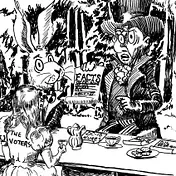
A healthy democracy depends on skepticism. But skepticism is not the same as automatic disbelief. We should question officials, demand evidence, and expose misconduct. This helps keep the government accountable. Disinformation campaigns are useful tools for authoritarians seeking to exploit these democratic habits by flooding the zone with fabricated claims, selectively edited ‘facts’, and conspiracy theories, not to make everyone accept one lie, but to make people believe truth is unknowable and only their political group can be trusted.
Such corrosion has practical consequences. Government institutions rely on public cooperation to conduct fair elections, respond to disasters, collect taxes, and defend the nation. If a large percentage of the population believes that every announcement is a partisan trick, they might ignore evacuation orders or reject emergency guidance. Accurate information begins moving through the system at a snail’s pace because institutions must first overcome suspicion created by earlier lies.
National security is weakened because trust itself is a form of strategic capacity. During a cyberattack, terrorist threat, or military crisis, officials need to communicate quickly and credibly. If the population is conditioned to see deception everywhere, it is harder to warn or mobilize. Confusion delays decisions, sparks panic, and opens the door for hostile actors to spread further rumors. Our adversaries don’t need to invent grievances. They only have to identify existing partisan divides, push the most inflammatory versions for wider circulation, and sit back and watch the conflagration.
Disinformation also weakens trust in people within our institutions. Career officials, intelligence analysts, judges, diplomats, and members of the military work under lawful oversight and merit scrutiny. But political campaigns that portray them as part of some ‘deep state’, or ‘enemies of the people’, can drive experienced professionals away, discourage qualified recruits, and make even routine public service a dangerous undertaking. Threats and harassment consume resources that should be devoted to primary missions. Over time, institutions become more cautious, less transparent, and less capable. These changes might deepen the distrust that disinformation created.
The damage that disinformation does extends to alliances. International partners share intelligence and coordinate policy when they believe our commitment will survive domestic political turbulence. If partisan disinformation continually undermines treaties, elections, or the legitimacy of national leaders, allies become hesitant to work with us. Adversaries, meanwhile, might interpret internal paralysis as an opportunity. A country that’s divided over basic facts will struggle to sustain a coherent international strategy.
Polarization further magnifies the problem. Once institutional confidence becomes a badge of party identity, people evaluate evidence more by who presents it than by its quality. Politicians are incentivized to attack neutral processes whenever the outcome is inconvenient. Short-term partisan gain becomes more important than long-term legitimacy. The institution that’s attacked today might be needed tomorrow to protect those attacking it.
The solution to the disinformation problem is not censorship or blind faith in authority. If we suppress lawful criticism, we violate democratic principles and confirm the suspicion of official manipulation. The way to go is to communicate promptly, admit mistakes, explain uncertainty, protect whistleblowers, and open institutional decisions to meaningful review. Transparency may not eliminate conspiracy theories, but secrecy and arrogance give them fertile ground in which to flourish.
We as citizens also have a role. Before passing along a juicy rumor, check sources, independently confirm, and ask yourself—was this message designed to inform or to inflame? Defend fair procedures even when your side loses, and criticize institutions without declaring them illegitimate.
Partisan competition is unavoidable, and can be productive. When competition turns every institution into an enemy and every inconvenient fact into a “hoax,” democracy is weakened. To rebuild trust, we need not agree with every policy. We do need, though, to have a shared commitment to evidence, lawful processes, and peaceful disagreement. This is one of the essential conditions for national security and renewing our democracy.
Founded in 2016, The Steady State is a nonprofit 501(c)(4) organization of more than 450 former senior national security professionals. Our membership includes former officials from the CIA, FBI, Department of State, Department of Defense, and Department of Homeland Security. Drawing on deep expertise across national security disciplines, including intelligence, diplomacy, military affairs, and law, we advocate for constitutional democracy, the rule of law, and the preservation of America’s national security institutions.