Democracy Doesn’t Die When Strongmen Take Power. It Dies When We Accept Them.
The warning from Paraguay is not about one protest. It is about what happens when power becomes more important than institutions.
Democratic erosion rarely begins with the abolition of elections or the arrival of tanks. It begins when citizens start accepting the idea that real power belongs to individuals rather than institutions—and that challenging that power comes at a price.
Recent events in Paraguay should concern anyone who cares about democracy.
And Americans should pay particular attention.
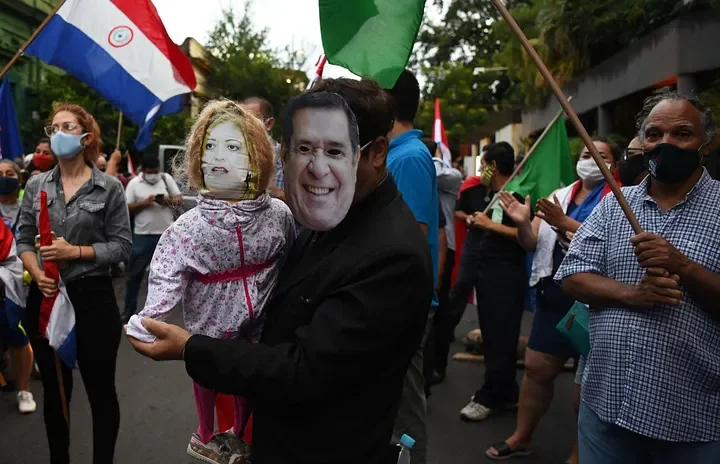
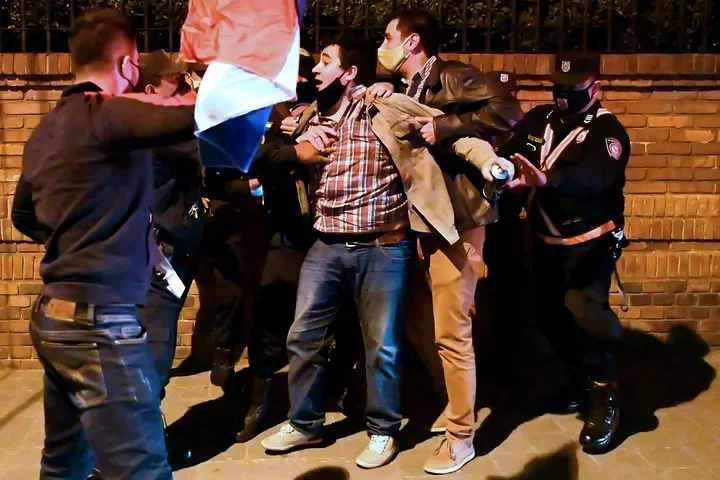
A small group of Paraguayans recently gathered peacefully outside the residence of former President Horacio Cartes to support doctors seeking better pay and improved public health funding. The demonstration was modest, even whimsical, featuring stuffed animals and handmade signs. Yet it reportedly ended with police intervention, detentions, and accusations that citizens engaged in peaceful protest were treated as threats rather than participants in democratic life.
The facts surrounding the incident will continue to be debated. Protesters and police have offered different accounts. But the larger questions raised by the episode extend far beyond one sidewalk, one demonstration, or even Paraguay itself.
What makes this incident so revealing is not simply that the protest occurred. It is where it occurred.
The demonstrators gathered not outside the presidential palace, a ministry building, or the national congress. Instead, they chose the home of a private citizen who currently holds no elected or appointed government office.
Why?
Because many Paraguayans believe that real political power does not reside in the institutions established by the constitution but instead remains concentrated in the hands of Cartes, whose influence over the governing Colorado Party is widely recognized. Whether that perception is accurate is ultimately for Paraguayans to decide. Yet the fact that many citizens hold such a view is itself significant. The location of the protest was a statement that constitutional authority and perceived authority are not necessarily the same thing.
That distinction should resonate far beyond Paraguay.
Across the world, including in the United States, democracy is under pressure. Citizens are increasingly losing faith that public institutions are transparent, accountable, and capable of acting independently of wealthy interests, political patrons, partisan machinery, or powerful personalities. The danger is not merely political polarization. The danger is that citizens begin to conclude that institutions themselves are largely performative and that real decisions are made elsewhere, by people who hold influence without corresponding public accountability.
That is how authoritarianism takes hold.
The rise of authoritarianism in the twenty-first century has rarely involved tanks in the streets or the abolition of elections. More often, it involves the gradual normalization of personalized power, attacks on institutional legitimacy, selective application of the law, and the belief that loyalty to individuals matters more than fidelity to democratic rules. No democracy, including the United States, is immune from that danger.
Americans need not look overseas to find debates over the boundaries of peaceful protest. Across the United States, universities, police departments, elected officials, and courts have struggled to balance public order with the protection of free expression. Whatever one’s views on the causes being advanced, a democracy is tested not by how it treats agreeable speech, but by how it responds to criticism, dissent, and protest that many people find uncomfortable.
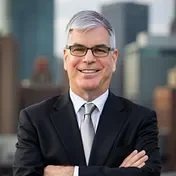
As a former U.S. ambassador to Paraguay, I have tremendous respect for the Paraguayan people and for the democratic progress their country has made over recent decades. Today, as dean of a school dedicated to leadership and public service, I view these events through another lens as well: the lessons young people are absorbing from what they see.
Future leaders are learning every day what citizenship means in practice. They are learning whether peaceful disagreement is accepted or discouraged. They are learning whether influence carries responsibility. They are learning whether institutions serve the public equally or appear to favor the powerful. Most importantly, they are learning whether democratic values are genuine principles or merely slogans invoked when convenient.
The civic lessons taught by public events often prove more powerful than those taught in classrooms.
Whether in Paraguay, the United States, or elsewhere, citizens learn about democracy less from constitutions than from watching how leaders, institutions, and law enforcement respond when ordinary people challenge power.
The lesson from Paraguay is not that democracy elsewhere is failing. The lesson is that democratic erosion often becomes visible first in small incidents that many people dismiss as unimportant.
Americans should not merely observe these events from a distance. We should use them as an opportunity for self-examination. We must demand institutions that are transparent, accountable, and stronger than any individual. We must defend the right to peaceful dissent even when we disagree with those exercising it. And we must reject the growing assumption that democratic norms are optional, negotiable, or inconvenient.
The survival of democracy ultimately depends on citizens who are willing to defend democratic principles before a crisis arrives, not after one.
Paraguay’s protesters were asking who really holds power in their country. Americans would be wise to ask the same question about our own.
Founded in 2016, The Steady State is a nonprofit 501(c)(4) organization of more than 500 former senior national security professionals. Our membership includes former officials from the CIA, FBI, Department of State, Department of Defense, and Department of Homeland Security. Drawing on deep expertise across national security disciplines, including intelligence, diplomacy, military affairs, and law, we advocate for constitutional democracy, the rule of law, and the preservation of America’s national security institutions.