“According to the Lawyers”
When the people charged with enforcing the rules become the people finding ways around them.
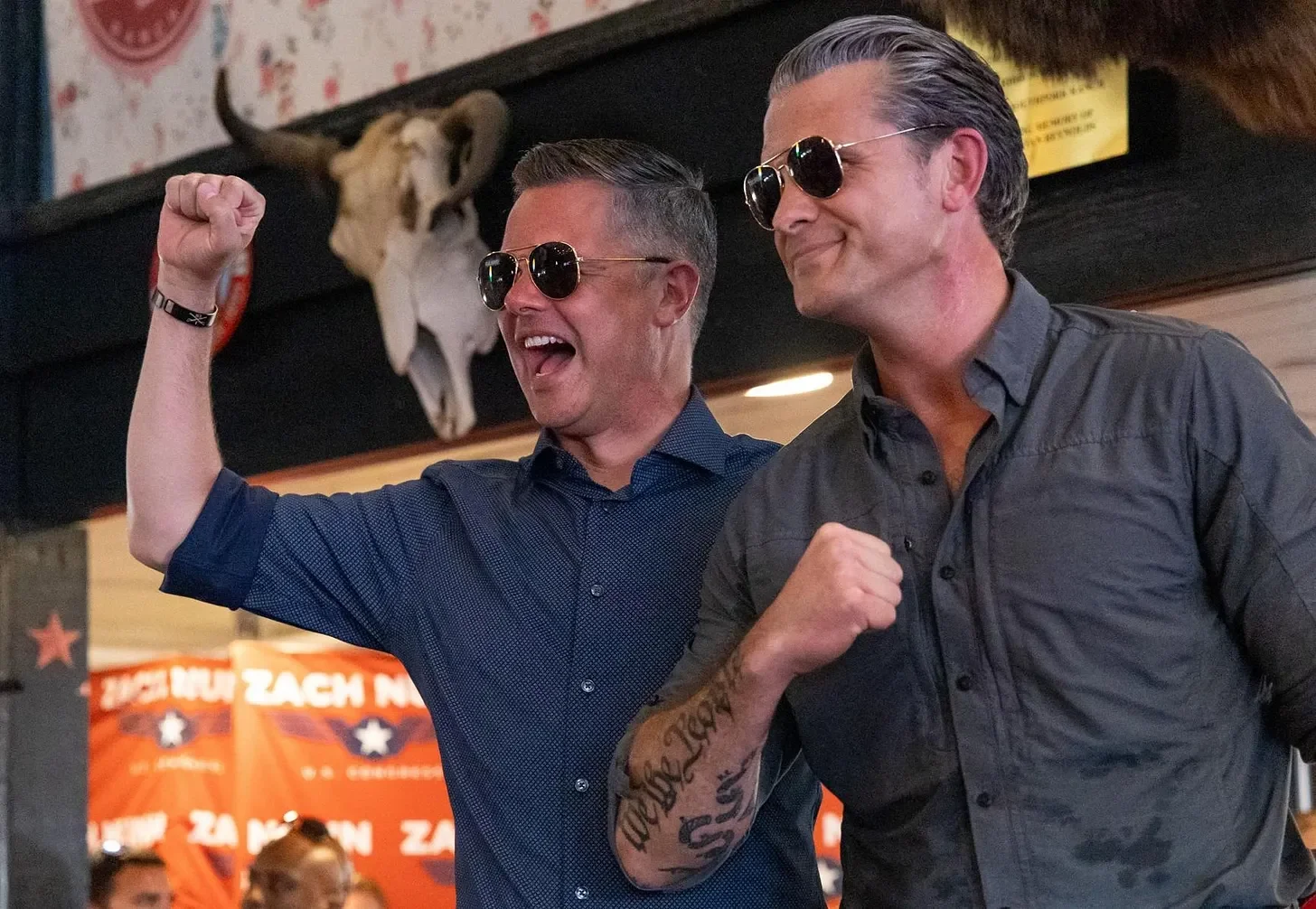
Photo credit: Michael Baniewicz/The Gazette
Pete Hegseth said he was at a campaign fundraiser “in a personal capacity.” But the Hatch Act doesn’t disappear with a disclaimer. When senior officials campaign using the visibility and power of their offices—and enforcement stalls—the question becomes: Who is enforcing the rules?
On August 17, a military jet landed in Des Moines carrying the Secretary of Defense. By afternoon, Pete Hegseth was on stage at the Iowa State Fairgrounds, headlining “Operation Top Nunn,” a fundraiser for Rep. Zach Nunn, who is in one of the most competitive House races in the country. Tickets ran from $26 to $3,500.
Hegseth told the crowd that he had started his morning “literally in the Oval Office.” He told them what the President needs from Congress. Referring to Nunn, he said, “We need guys like this man right here having our back in Congress.” Then, three-quarters of the way through, he paused. “According to the lawyers, I’m only here in a personal capacity today.” And a moment later: “I had to say that…for the lawyers.”
He knew the law. He said it out loud. Then he kept going.
The law is the Hatch Act, passed in 1939 after federal relief workers were pressured to back candidates in the 1938 midterms, especially in Kentucky. Since that time, it’s barred most federal employees from using the authority of their office to influence elections. The idea is simple. The government belongs to all of us, not to whichever party holds it.
The law doesn’t cover the President or Vice President, and Senate-confirmed officials like Hegseth get more leeway, including on trips that mix official and campaign stops, as long as taxpayers don’t pay for the political part and they don’t use their office to influence the election.
Iowa was not a one-off. Since January 2025, watchdog groups, members of Congress, and The Steady State have filed dozens of Hatch Act complaints against cabinet secretaries and senior White House officials. Some have been pending for months, one for more than a year. Meanwhile, the Office of Special Counsel (OSC), the agency charged with enforcing the Hatch Act, has announced this year have involved rank-and-file federal employees. Apparently the laws still apply to them.
Who is enforcing this law?
In July, The Steady State filed a complaint about Hegseth’s appearance at a Kentucky campaign rally. The OSC closed it the next day, saying it had “confirmed” that taxpayers were reimbursed for his travel. When we requested the case file under the Freedom of Information Act, we received 102 pages, 99 of which were our own complaint. Nothing in the file provided any “confirming” information.
The Pentagon has its own rule, a directive restricting political activity by its political appointees. When another group asked the Pentagon’s Inspector General to look into Hegseth, the Inspector General declined, stating that the OSC “has exclusive authority to investigate alleged violations of the Hatch Act,” calling a review “duplicative” of OSC’s work. and noting that “the White House approved his participation.” OSC, for its part, says it does not enforce Pentagon policy. Each office points to the other.
A rule no one enforces isn’t a rule.
And at the end of the chain sits the President. When OSC finds that a Senate-confirmed official has broken the law, it can only send a report to him. He is the one who decides whether anyone faces consequences, and he leads the party these appearances are meant to help.
Questions remain, and the answers matter before November 3, not after.
Who paid for these trips? If taxpayers covered any of the political part, the public deserves to know how much and whether it was ever repaid.
Were these officials using the power of their office to influence an election? That is exactly what the Hatch Act was written to prevent.
Will the Office of Special Counsel resolve the complaints pending against senior officials before voters go to the polls?
Who at the Pentagon enforces its own rules on political activity, if not its Inspector General?
And where is Congress? When the accountability chain ends with the one person who benefits, in this case, President Trump, lawmakers are the check that remains.
The Hatch Act was written so that the power of government would never be turned into the power of a campaign. Right now, the only thing standing between those two is a disclaimer reading “according to the lawyers.”
Voters deserve to know whether anyone is enforcing the rules before they cast their ballots, not after. Ask your representative where they stand.