Hold Fast: The Importance of a Nonpartisan Civil Service
Tell Me What I Need to Know

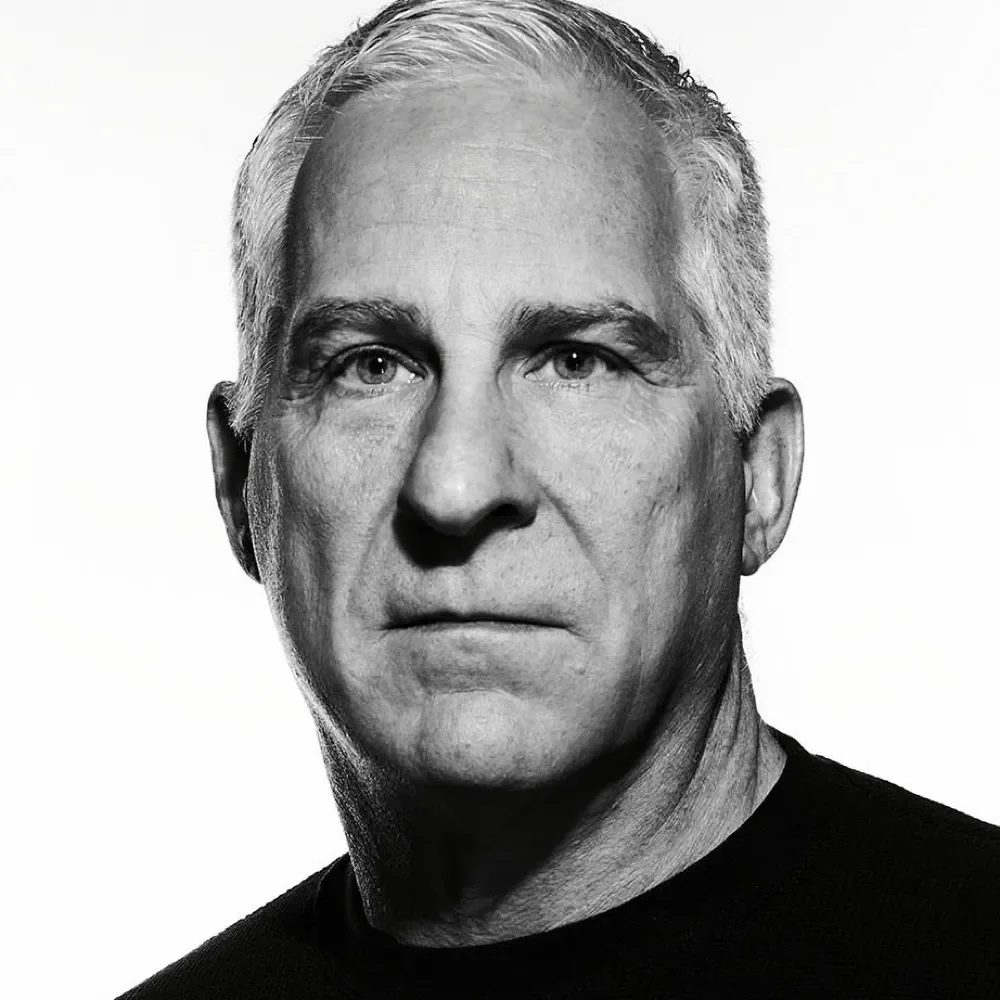
Former FBI Director Mueller receiving a daily briefing
Government works when political leaders get candid advice from people who understand the facts, the law, and the machinery of government. The moment professional judgment becomes synonymous with disloyalty, competence disappears.
Some partisan flash points should be matters of basic common sense. One is the need for a professional, nonpartisan civil service.
The Trump Administration portrays career public servants as members of a sinister “deep state” determined to frustrate the will of political leaders. Of course, the reality is far different. Civil servants are committed not to a president or political party, but to the Constitution, the rule of law, and the responsibilities of their professions. They cannot always simply say yes to whatever a president utters. Intelligence officers, diplomats, law-enforcement officials, scientists, regulators, and national-security professionals have an obligation to explain what is lawful, what is practical, and what the facts actually show. That is not obstruction. It’s the job.
The federal government is responsible for the security, health, prosperity, and basic functioning of the largest and most complex country in the world. Political leaders are elected to set policy and establish priorities. But transforming those priorities into effective action requires knowledge accumulated over years and often decades. Professional government staff possess a kind of working expertise that cannot be quickly acquired by a political appointee.
As Julia Curlee pointed out in a recent article in Lawfare, a senior national-security official, for example, may need to understand how the intelligence community evaluates uncertain reporting, how the Pentagon develops military options, how the Treasury Department constructs sanctions that will withstand legal challenge, and how diplomats coordinate policy with allies. The knowledge is not necessarily glamorous, but it often determines whether a president’s direction can be executed, or remains an aspirational statement that cannot be carried out successfully.
We recognize the value of expertise in nearly every other aspect of life. We consult doctors about illness, lawyers about legal problems, and engineers about the safety of bridges. We would dismiss at our peril a surgeon’s advice because it was something we didn’t want to hear or was politically inconvenient. Pretending that expertise becomes unnecessary when the questions involve war, public health, financial stability, aviation, or national security is reckless.
A nonpartisan civil service also provides necessary continuity. Presidents come and go. Political appointees often remain in their positions for only a few years. Career professionals preserve institutional memory, maintain relationships with state and local governments and foreign allies, and understand why policies and safeguards were created in the first place. They know which ideas have already been attempted, which legal limits must be respected, and which seemingly simple solutions may produce unintended consequences.
This continuity is the foundation of national stability. Elections must have consequences, and a president has every right to overrule the bureaucracy. But a president who humiliates, disables, or purges the professional workforce is not demonstrating strength. He is stripping himself, and the country, of the machinery designed to prevent mistakes. Much as politicians might like, high-stakes government cannot be managed through instinct, personal relationships, and loyalty alone. It requires preparation, coordination, verification, and a structured means to handle disagreement.
As I’ve written previously, professional norms are especially important in agencies that exercise extraordinary power. The abuses uncovered at the CIA and FBI in the 1970s led to bipartisan reforms imposing legal boundaries, congressional oversight, internal accountability, and stronger ethical standards. Those reforms did not weaken the intelligence community. They helped legitimize it by ensuring that secret agencies served the country rather than becoming the personal instruments of a president.
The same principle applies throughout government. Neutrality does not mean that civil servants have no personal political views. It means that they do not manipulate their professional work to advance those personal views. Intelligence officers are taught to speak truth to power. Prosecutors are expected to apply the law without fear or favor. Scientists report what the evidence shows. Regulators must enforce rules consistently. The legitimacy of government depends on the public believing that these functions are not simply weapons wielded against political enemies.
As I outlined in a recent New York Times piece, once professionalism is redefined as disloyalty, the damage spreads quickly. Leaders begin to assume that any unwelcome fact was produced by an enemy. Experts are pushed aside and loyalists elevated. Career officials learn that honest advice may bring punishment, while blind compliance brings advancement. The strongest employees leave. Others self-censor. Ambitious officials learn to tell leaders what they want to hear.
A professional civil service is therefore not an enemy of democratic government. Instead, it is one of democracy’s essential bulwarks. Political leaders provide direction, but career professionals provide competence, continuity, legality, and reality. Their duty is not to serve a particular president’s personal interests. It is to help every president serve the country. It is how a stable republic protects itself from corruption, incompetence, and the dangerous illusion that loyalty can substitute for knowledge.