Hold Fast: What a President Actually Controls
Tell Me What I Need to Know
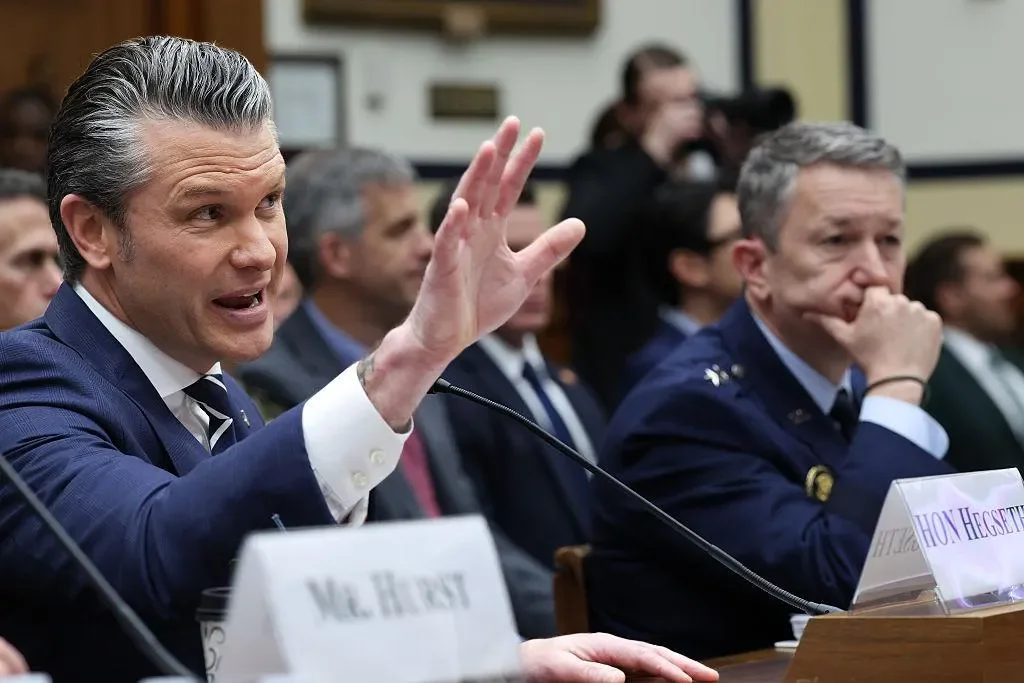
Pete Hegseth And Dan Caine Appear For House Budget Request Meeting
When you vote for Congress, you are not just choosing a representative. You are choosing who controls the money, authorizes war, and checks the president.
In June, both houses of Congress voted to order U.S. troops out of the war with Iran: 215–208 in the House and 50–48 in the Senate. The war went on: Congress’s resolution did not carry the force of law, and months later, American troops were still being killed and wounded.
By contrast, last December the Supreme Court refused to let the president send National Guard troops into Chicago over Illinois’s objections, finding the government had no authority to send the military to enforce the law there. A week later, the president announced he was pulling the Guard out of Chicago, Los Angeles, and Portland.
The same president, two attempts to check his powers, two results. A president is strongest when exercising his war powers. He is weakest when he needs something another branch controls: money Congress must approve, or a law the courts can review. In short: The president commands, Congress pays, and the courts referee.
Presidential Powers
Defense. The president commands the armed forces, can order deployments, and he alone can order a nuclear strike. But only Congress can declare war or pay for one, and the War Powers Resolution limits a president to 60 days of combat without Congress’s approval. At home, troops generally cannot act as a police force unless the president invokes the Insurrection Act.
Intelligence. The president oversees 18 intelligence agencies, decides what to declassify, and can order covert action: secret operations the U.S. won’t acknowledge. But the president must report each covert action in a written “finding” to Congress. Spying on Americans generally requires a court order under the Foreign Intelligence Surveillance Act.
Emergencies. Declaring a national emergency unlocks special powers written into other laws, and 52 were in effect as of mid-September. Congress can end an emergency, but the president can veto that vote, so in practice it takes two-thirds of both chambers.
Why It Matters to Voters
Your family: whether the president sends a relative or neighbor in the National Guard to another state’s streets, or to a foreign country in a war Congress never approved.
Your safety: a president can launch strikes abroad that invite retaliation against Americans, before Congress ever votes.
Your privacy: surveillance tools built for foreign threats can reach Americans when safeguards weaken.
Your vote: the checks work only if someone uses them. On November 3, you elect the Congress that controls the money and votes on whether to bring the troops home.
Warning Signs
Listen for a candidate, of either party, who:
says the office has “no limits,” or treats Congress and the courts as obstacles;
promises to use the military against Americans (“the enemy within”) or calls protests an “insurrection”;
plans to declare an emergency to get what Congress refused to pass;
vows to fire intelligence officials whose conclusions are inconvenient; or
calls any restraint or dissent “disloyalty.”
The mirror image: a congressional candidate who calls war and emergencies “the president’s call” is promising to surrender Congress’s core duties.
What Congress Can Fix
Congress has started taking power back: last December it repealed the 1991 and 2002 Iraq war authorizations, the first such repeal in more than 50 years.
Fixes to consider and to ask candidates about:
Make national emergencies expire after 30 days unless Congress votes to keep them, as the bipartisan ARTICLE ONE Act would.
Cut off war funding automatically when the War Powers Resolution’s 60-day clock expires.
Retire the 2001 Authorization for Use of Military Force, which presidents have stretched for 25 years to cover new enemies.
Give the Insurrection Act clear triggers and an end date.
Questions to Ask
To a congressional candidate (this November): “If a president keeps troops in combat that Congress hasn’t approved, or ignores a court order, will you vote to cut off the money?”
To a presidential candidate (in 2028): “If Congress votes to end a war you started, will you bring the troops home, even if you think the vote is wrong?”
The Bottom Line
The president commands. Congress pays. The courts referee. And voters pick the players, starting November 3.
Glossary
Power of the purse: Congress’s control over federal spending.
War Powers Resolution: a 1973 law limiting military action without Congress’s approval to 60 days.
Authorization for Use of Military Force (AUMF): a law approving force against a named enemy without declaring war.
Finding: the president’s written approval of a covert action, which he must report to Congress.
Insurrection Act: the main exception to the rule barring troops from policing at home.