Drill, Deal, Disclose?
Who gets access, who gets paid and who is keeping track?
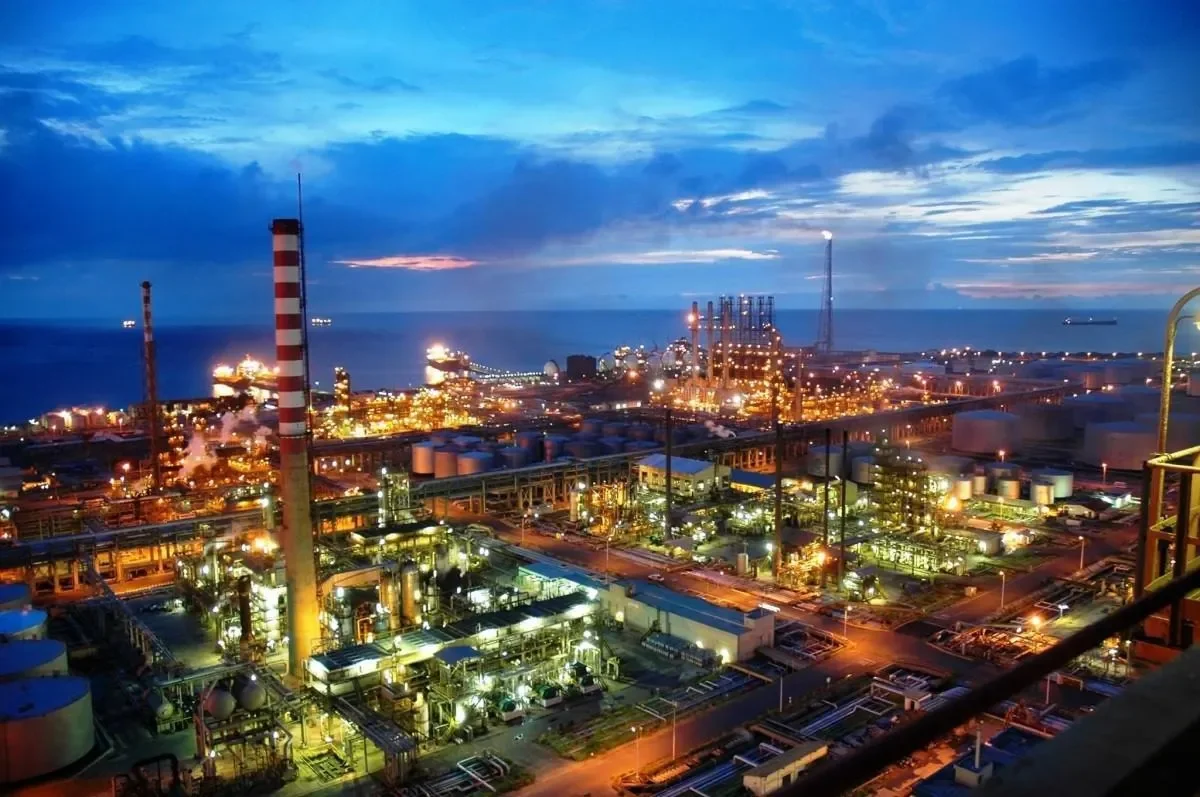
Amuay Oil Refinery, Venezuela
Venezuela’s oil is becoming a test of whether government power can be used to distribute enormous economic benefits without transparent rules, competitive bidding or meaningful public oversight. So far, the Trump administration has provided more deals than disclosures.
Donald Trump has explained what he thinks the United States won in Venezuela. “We’re taking a lot of oil,” he said in August. “To the victor belong the spoils.”
He has governed that way.
Since the January operation that removed Nicolás Maduro, his administration has decided who may develop Venezuelan oil, who may buy it, and where the money goes. Trump has used that power to choose companies that have paid bribes or whose principals have been accused of money laundering, and to benefit political donors, Trump allies, family-connected businesses, and clients of Trump-connected lobbyists.
Consider who has benefited. The administration chose Vitol and Trafigura to sell roughly $500 million in Venezuelan oil without competition. Both companies had recently resolved federal bribery cases. A senior Vitol trader had also contributed more than $6 million during the 2024 election cycle, overwhelmingly to Trump-aligned committees.
The largest prize went to North American Blue Energy Partners, or NABEP, controlled by Venezuelan businessman Alejandro Betancourt. Betancourt was identified as an unindicted co-conspirator in a federal case involving the alleged laundering of $1.2 billion stolen from Venezuela and remains under criminal investigation in Spain and Switzerland. The Trump administration helped him deal with those investigations and then made his company its partner. NABEP received 14 additional oil fields without competition, giving it access to an estimated 65 billion barrels, about one-fifth of Venezuela’s reserves.
Other companies backed by million-dollar inaugural donors have received Venezuelan oil opportunities. Trump-connected lobbyists have been hired to secure oil-field approvals. India’s Reliance Industries won permission to buy Venezuelan crude and then invested at least $100 million in a refinery venture partly owned by Donald Trump Jr.
The government itself is also getting a stake. The administration gave the Pentagon’s Office of Strategic Capital, or OSC, a 35 percent interest in NABEP’s parent company. Congress authorized OSC to make loans and loan guarantees and provide technical assistance. It did not authorize OSC to own private companies. So the administration came up with a workaround: “penny warrants.” OSC can acquire the shares later for a nominal price. Until then, the government supposedly does not own them. But it gets the dividends and other economic benefits now.
Basic questions remain unanswered. Who holds the warrants? Where will the dividends go? What happens if the warrants are sold? How much money could the government receive, how much will go to private parties, and who decides what to do with it?
There is no visible governmental process for deciding who gets the rights to exploit Venezuela’s resources, either. The administration has published no standards for choosing companies and conducted no open competition. It simply picks them.
The supposed check on all this was KPMG. The State Department gave KPMG a sole-source contract potentially worth more than $84 million to oversee Venezuelan natural-resource revenues. But KPMG is also helping design and operate the financial system it is supposed to check. Administration officials initially promised quarterly audits. None have been released.
Then officials began calling KPMG’s work “monitoring.” Now the administration reportedly has not provided KPMG’s reports to Congress or cooperated with the Government Accountability Office’s effort to examine the money.
This is not a small bookkeeping problem. At least $13 billion in Venezuelan oil revenue has reportedly come under U.S. control. The administration has not accounted for how much it collected, how much remains, where it is being held, how much has been spent, who received it, or what KPMG found.
Which raises an obvious question: What don’t they want anyone to see about the money, the deals, and the decisions?
We don’t know. Perhaps the books are a mess, and some expenditures cannot be documented or justified. Perhaps Venezuelan money has been used for purposes the administration has not disclosed, or that do not match what it has told the public. Perhaps the records would show payments or other benefits going to favored participants in the Venezuela operation. More than one could be true.
There is a simple way to find out: show the records. If billions are sitting safely in an account, that should be easy to establish. If money has been spent for authorized purposes, show where it went and who got it. If KPMG has checked the transactions, let Congress and GAO see what KPMG found.
For now, the secrecy is not incidental. The continued success of Trump’s patronage system, financed by another country’s oil, depends on it.
For in-depth coverage by the author on this subject, read more here