
Kill the Courier. Pardon the Kingpin
Seventy strikes, 234 dead, billions spent—and a drug war that is neither working nor following the law.
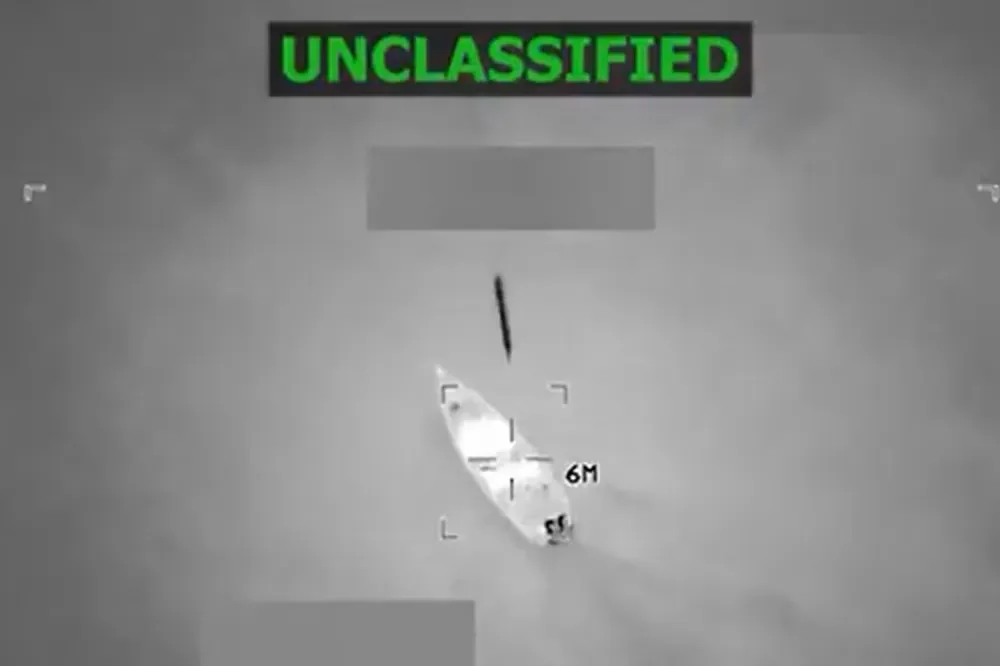
A video posted by Defense Secretary Pete Hegseth on X reportedly shows U.S. military forces conducting a strike on a vessel in the Caribbean Sea on Oct. 23. Defense Secretary Pete Hegseth via AFP
The administration calls it a war on drugs. The evidence suggests something far more troubling: extrajudicial killings that aren’t stopping the drugs, aren’t building cases, and may be putting American service members in legal jeopardy.
70 strikes. Four more people killed in the Caribbean last week. 234 dead in a year.
And those are just the ones we know about.
The Southern Command in charge of these operations full public justification of the latest strike: “Confirmed intelligence revealed the vessel’s active involvement in narco-trafficking.”
No names. No evidence. No trial.
On Sunday, the UN Special Rapporteur on counter-terrorism and human rights published his legal review of the campaign that brutally dismantles every justification the administration has proffered.
It isn’t self-defense: Moving drugs is not an armed attack by conventional armed forces because such acts are “too causally distant… since deaths may result only after a chain of intervening events, including distribution, sale and consumption.”
It isn’t war: There is no armed conflict, so the law of war authorizes nothing.
It isn’t law enforcement: The law of the sea lets you stop, board, and inspect a vessel. It does not let you blow one up on suspicion.
It isn’t necessary: The Secretary of State admitted the boats could have been intercepted. The U.S. chose to destroy them instead.
What the report does call it: “serial extrajudicial killings.” For the first 68 strikes and 223 deaths, it finds “reasonable grounds to believe” they were crimes against humanity of murder.
Precedent? Rodrigo Duterte, the former president of the Philippines, is on trial for crimes against humanity of murder for killing suspected drug offenders. For our President, who enthusiastically supports authoritarian strongmen, it’s unsurprising company to keep.
It gets worse.
In most strikes where people survived the first hit, the survivors were never recovered, even though their location was known. In at least one instance, two shipwrecked survivors were targeted and killed.
And this strategy isn’t even working. The report cites a Drug Enforcement Agency (DEA) assessment that the strikes have not reduced the supply or price of cocaine. Fentanyl, the drug that kills more Americans than any other, isn’t coming from Venezuela by speedboat.
The cost of American military operations carrying out these strikes by mid-2026 was $4.7 billion.
The strategy is also self-defeating. Drug cases are built from the bottom up: you arrest the courier, flip him, and follow the trail to the people who run the operation. Dead couriers can’t testify. Sunk boats yield no evidence. The UN report says it plainly: killing low-level, “replaceable” suspects has thwarted the evidence gathering needed to prosecute cartel leaders.
Kill the courier. Pardon the kingpin.
And when prosecutors do land a kingpin? Last December, Trump pardoned Juan Orlando Hernández, the former president of Honduras and fellow autocrat, who was convicted of helping move an estimated 400 tons of cocaine into the United States. Prosecutors called him the center of “one of the largest and most violent drug-trafficking conspiracies in the world.” He served less than two years of a 45 year sentence.
Every military member learns the same rule. I learned it in twenty-three years of annual law of armed conflict training: you obey lawful orders. The report notes that this government has punished former service members for reminding troops of that duty, and has not punished the people who ordered the killings.
Military lawyers advise. Commanders decide, and commanders own the accountability. The top lawyer overseeing the operation reportedly warned, before the first strike, that these could be extrajudicial killings. He was overruled, and the Pentagon’s spokesperson denied anyone raised objections. Firing the military’s top lawyers and ignoring the other legal advice does not make the orders lawful.
The administration calls the people on those boats terrorists. The UN report says the strikes themselves could qualify as terrorist acts. Service members, who may someday face accountability, are left in a horrible bind.
